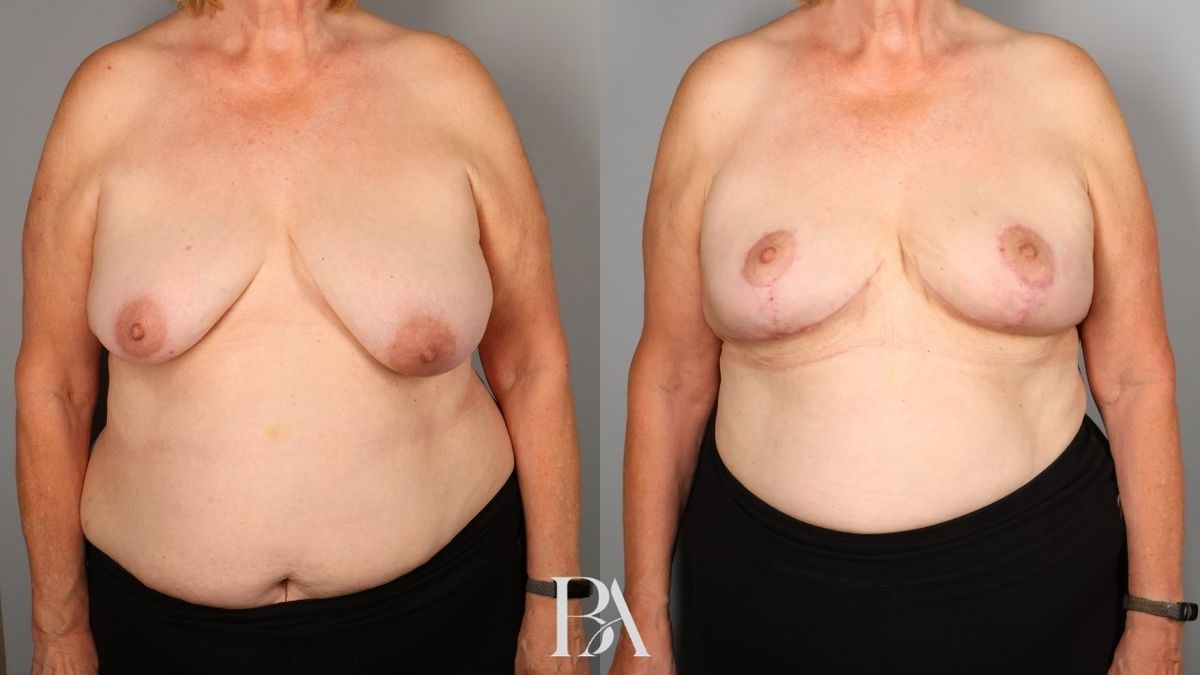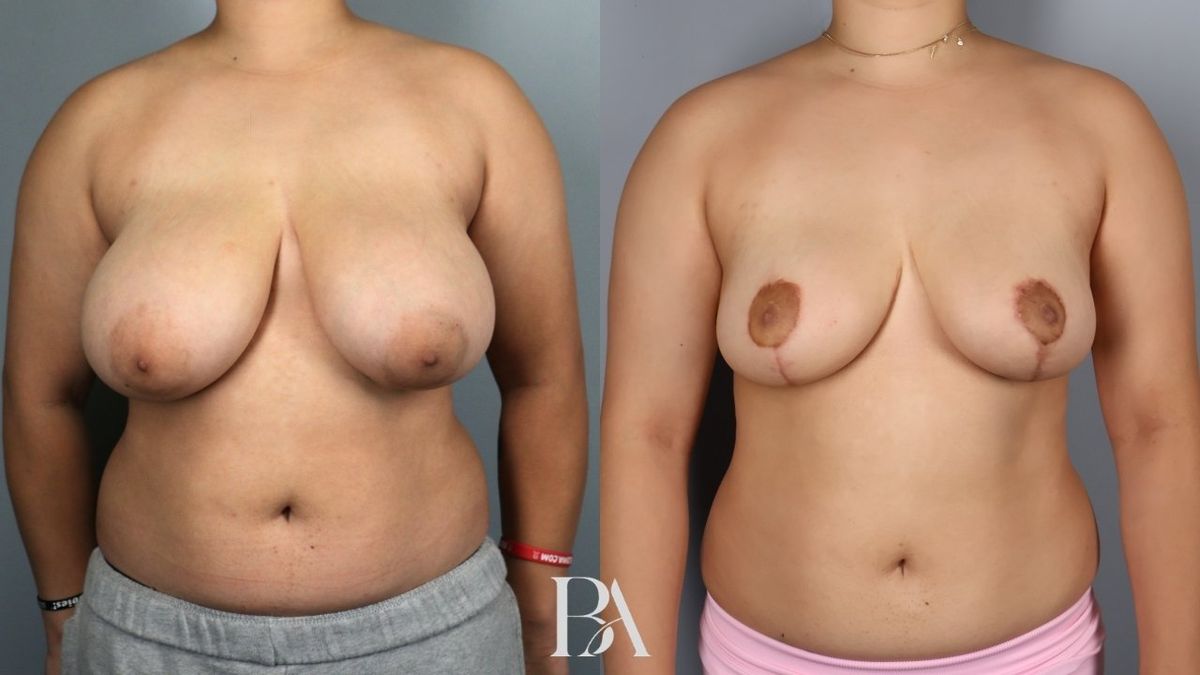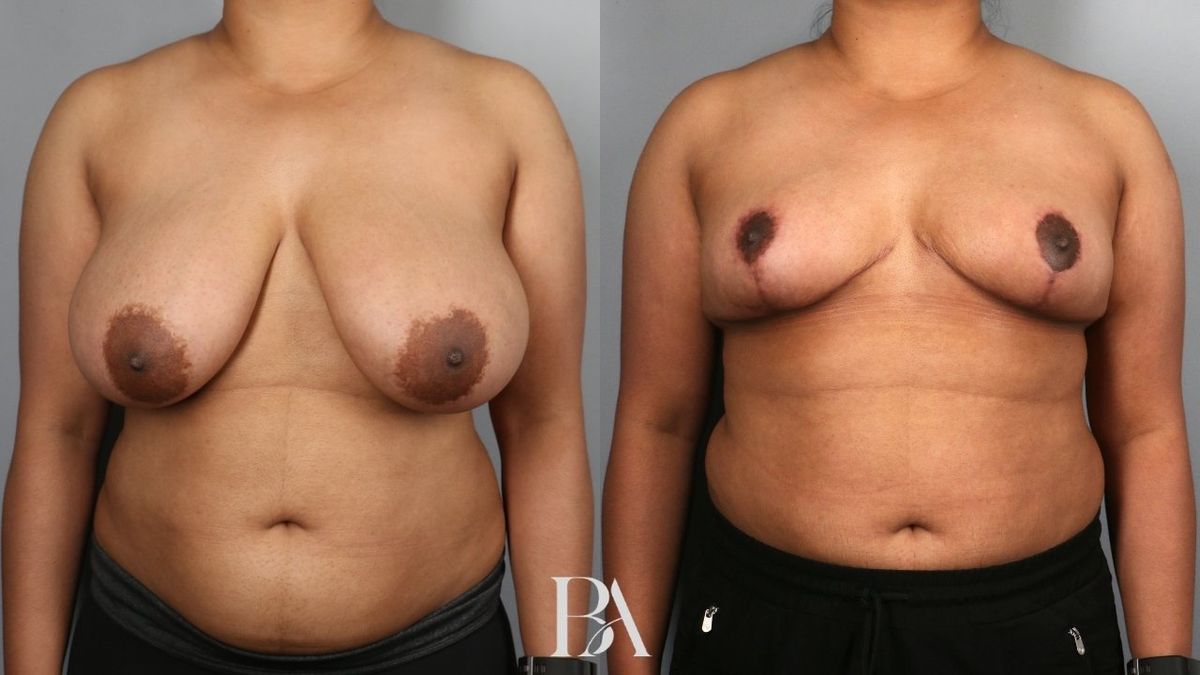
Case #1206
Oncoplastic Reduction
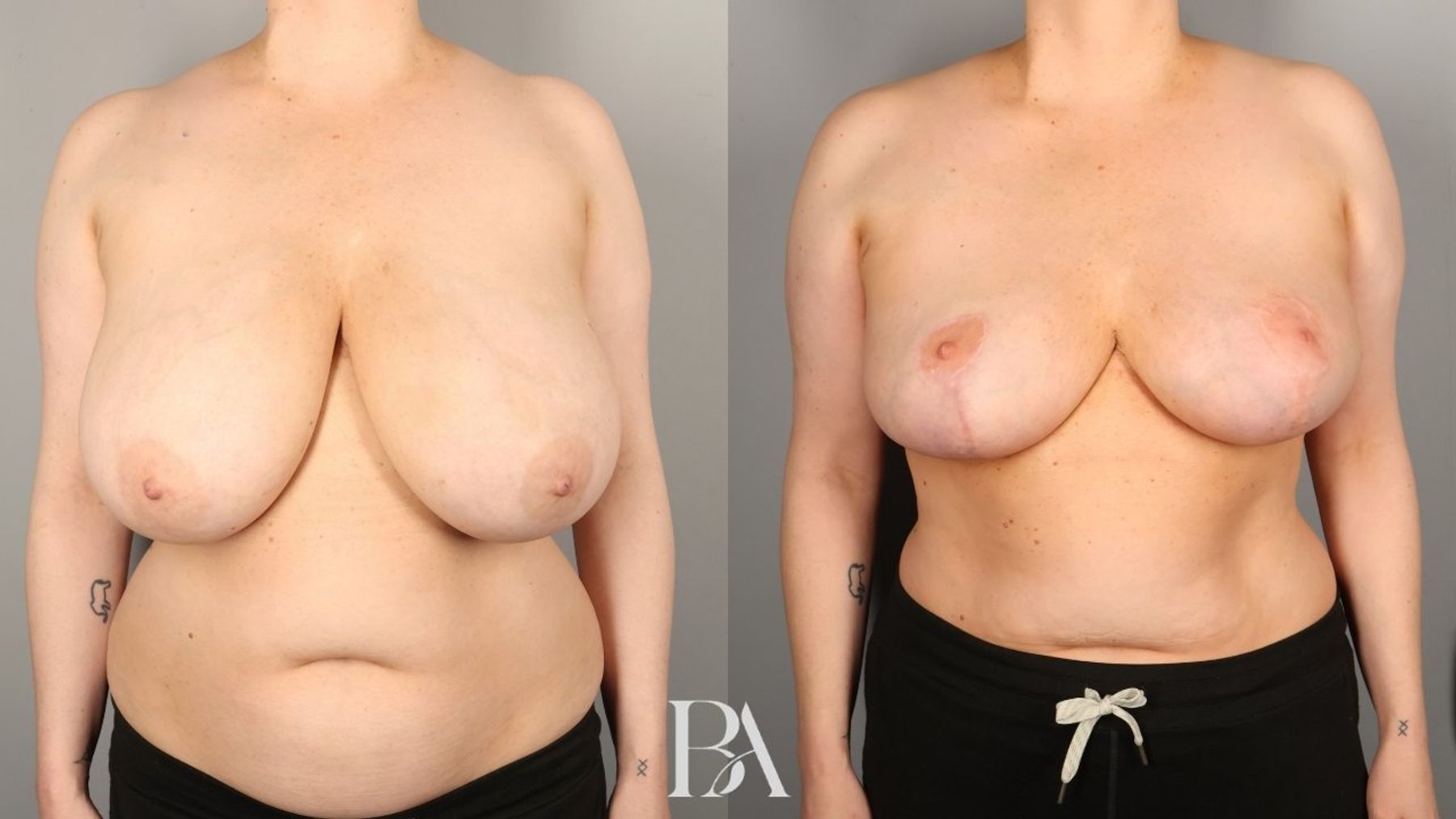
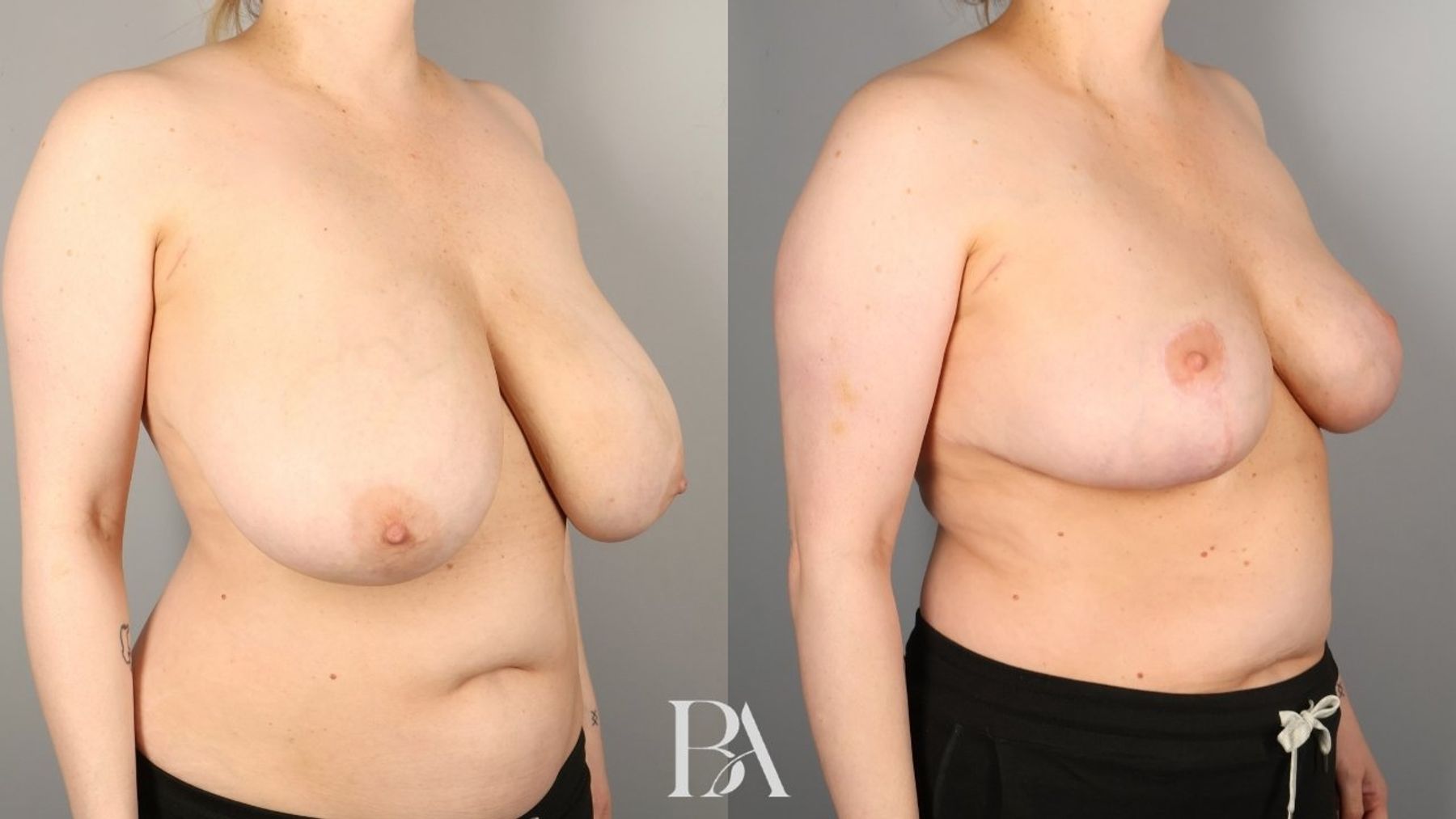
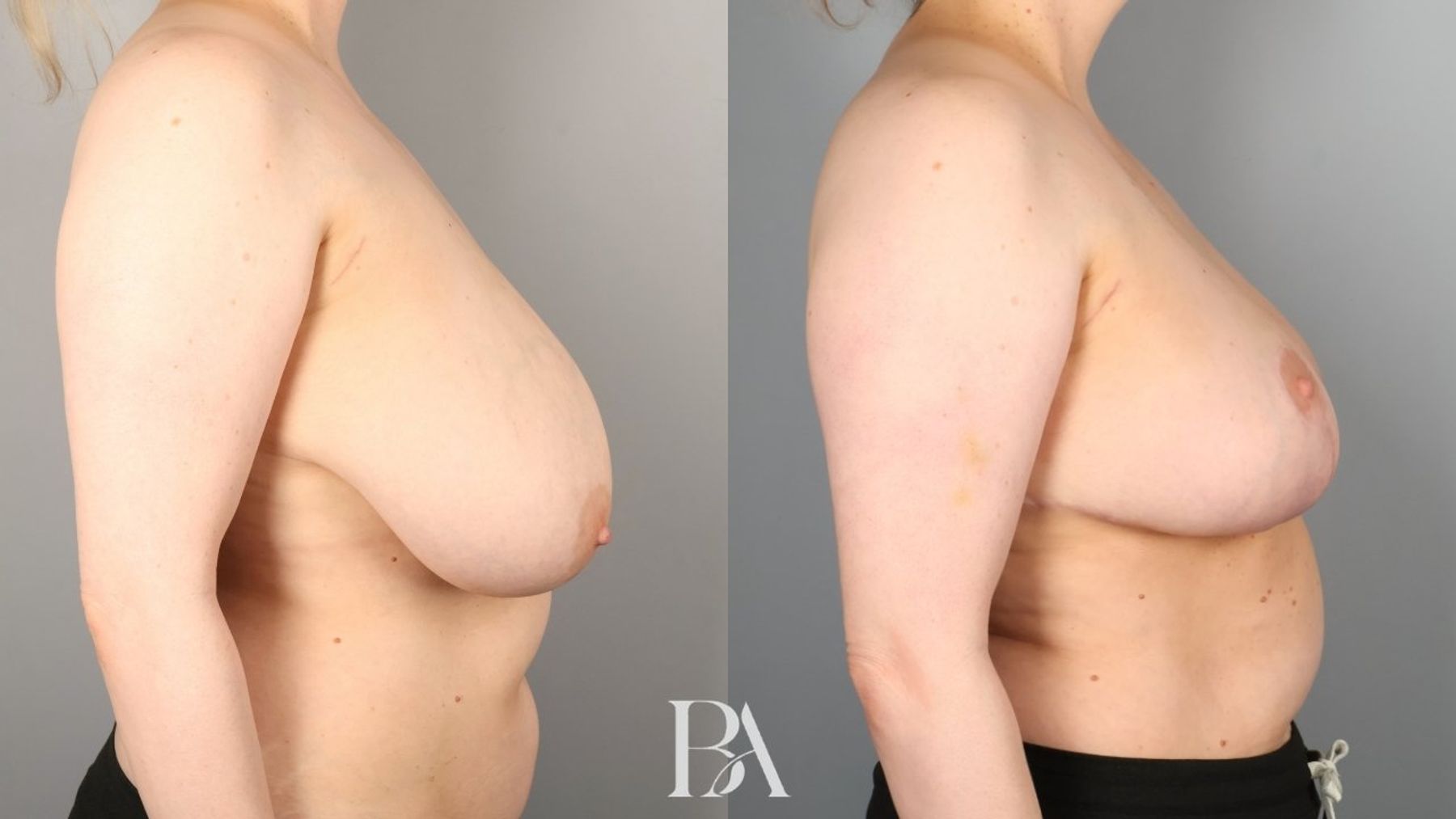
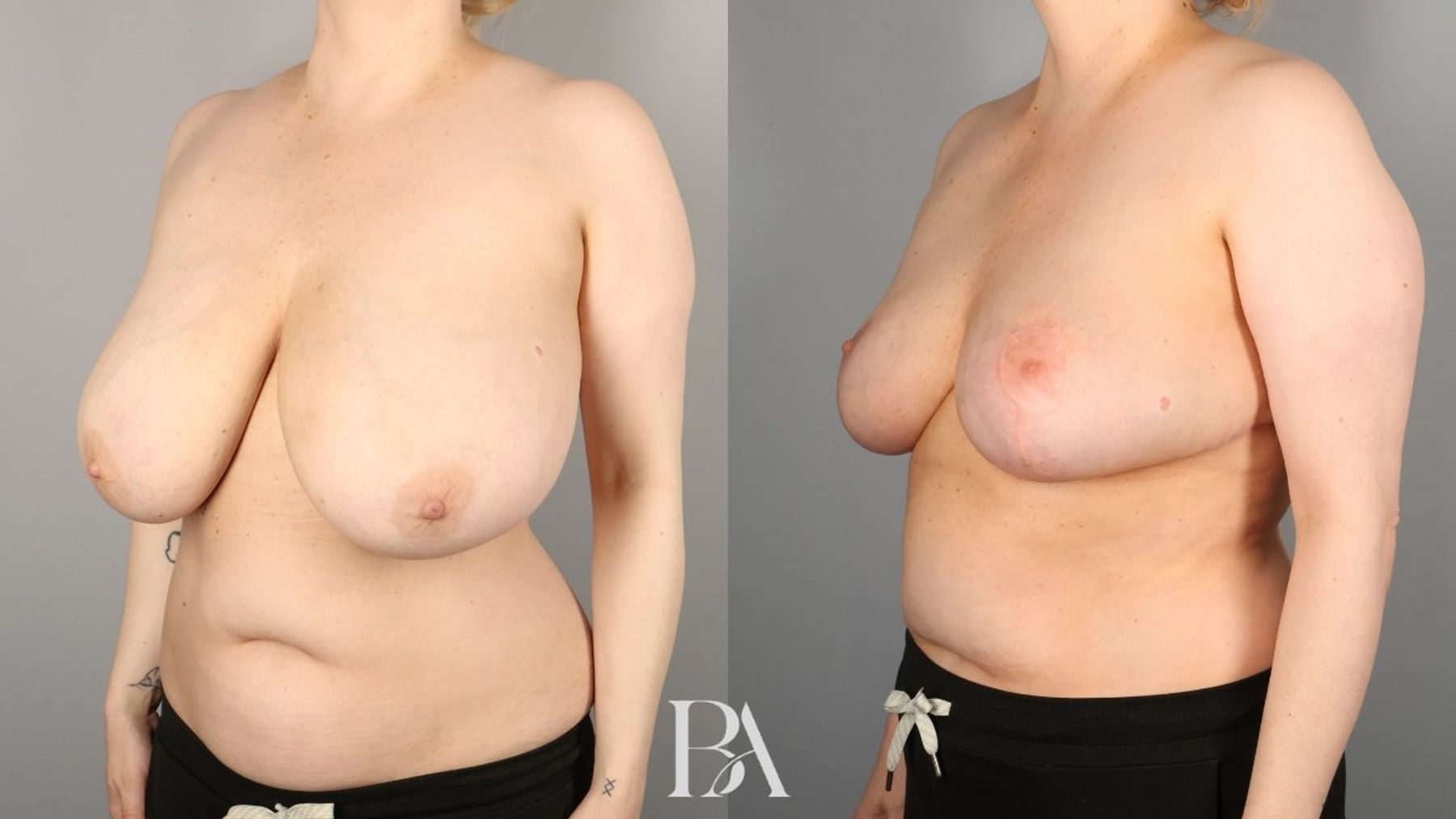
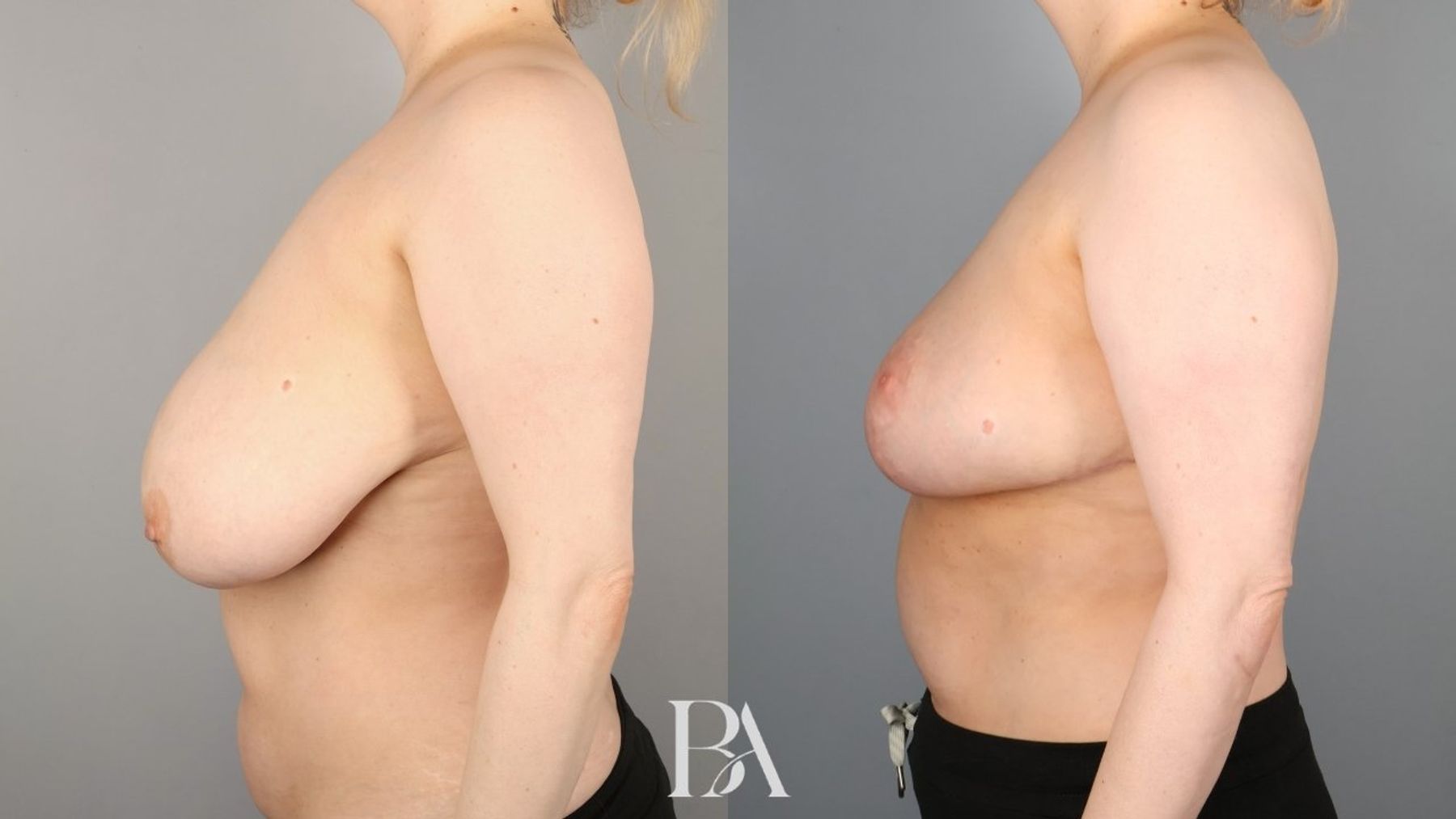
This 39-year-old female had very large breasts that caused her significant back pain and discomfort. She was then diagnosed with left breast cancer, so an oncoplastic reduction was done to remove the cancer while simultaneously reducing the size of her breasts. About 700g of tiss
This 39-year-old female had very large breasts that caused her significant back pain and discomfort. She was then diagnosed with left breast cancer, so an oncoplastic reduction was done to remove the cancer while simultaneously reducing the size of her breasts. About 700g of tissue was removed from each breast. Here she is several months after surgery and post-operative radiation.
Why this approach
The decisions that shaped this surgical plan.
- Approach driven by the oncologic priority first: incisions and tissue handling chosen to give the oncology team the access they need, then to set up the cleanest reconstructive canvas.
- Both sides treated in the same session — symmetric planning, identical tissue handling, and matched final contour are easier to achieve in one operative window than in two.
Pre-op preparation
What to do before surgery. Specific to this case.
- Aspirin, ibuprofen, vitamin E, and fish oil discontinued 14 days pre-op to reduce bruising risk. Acetaminophen is allowed.
- No nicotine for 6 weeks before through 6 weeks after surgery. The vascular impact directly affects skin healing.
- No overhead clothing for 3 weeks. Stock front-zip tops, supportive sports bras (post-clearance), and the drain pouches we provide.
- Confirm a driver for surgery day and a companion who can stay through the first night.
- Oncology results, imaging, and any chemotherapy timing reviewed in the pre-op visit. All coordination is handled in-house.
Recovery timeline
Milestones specific to this case. Individual recovery varies.
- Day 1–7
Drains in place, restricted lifting (nothing over 5 lb), and rest. Pain management is shifted off narcotics within the first 72 hours when possible.
- Week 2
Patients off prescription pain medication, walking 1–2 miles daily, and back to most light household activity.
- Week 4
Light cardio and most desk-work activities cleared. Lifting limit increases to 15 lb. Scar massage typically starts now.
- Week 6
Most physical restrictions lift. Return to strength training, full-impact cardio, and overhead lifting.
- Month 3
Coordinated oncology and surgical check-in. Reconstruction shape and feel begin to mature.
- Month 6
Mature result. Patients commonly schedule the final phase of staged reconstruction here.
Continued care
Recommended aftercare, skincare, and MedSpa services for Oncoplastic Reduction.
- Surgical bra continuously for 6 weeks
- Sleep elevated on your back for the first 2 weeks
- Drains, if used, removed at days 5–7
- Scar management protocol at 3 weeks
- Coordinate radiation timing with the oncology team
- Medical-grade silicone sheeting on the anchor or lollipop incisions
- SkinCeuticals C E Ferulic for scar healing
- SPF 50+ on incisions for 12 months
- LED light therapy weekly for the first 8 weeks
- Lymphatic drainage starting week 2
- Fractional laser for scar refinement after 3 months once cleared
- Aftercare
Hyperbaric oxygen series extended to 10–15 sessions for bilateral tissue support.
Bilateral procedures heal more reliably with sustained HBOT.
- Coordination
Long-term surveillance imaging stays on the oncology pathway; our team coordinates timing with theirs.
Post-mastectomy patients stay on a long-term surveillance pathway.
- Aftercare
Priority lymphatic drainage starting week 1.
Lymphatic disruption from axillary work makes early drainage more valuable.
- Skincare
SPF 50+ on incisions daily for the first year; younger skin pigments scars more reliably under UV.
Younger skin pigments scars more reliably under sun exposure.