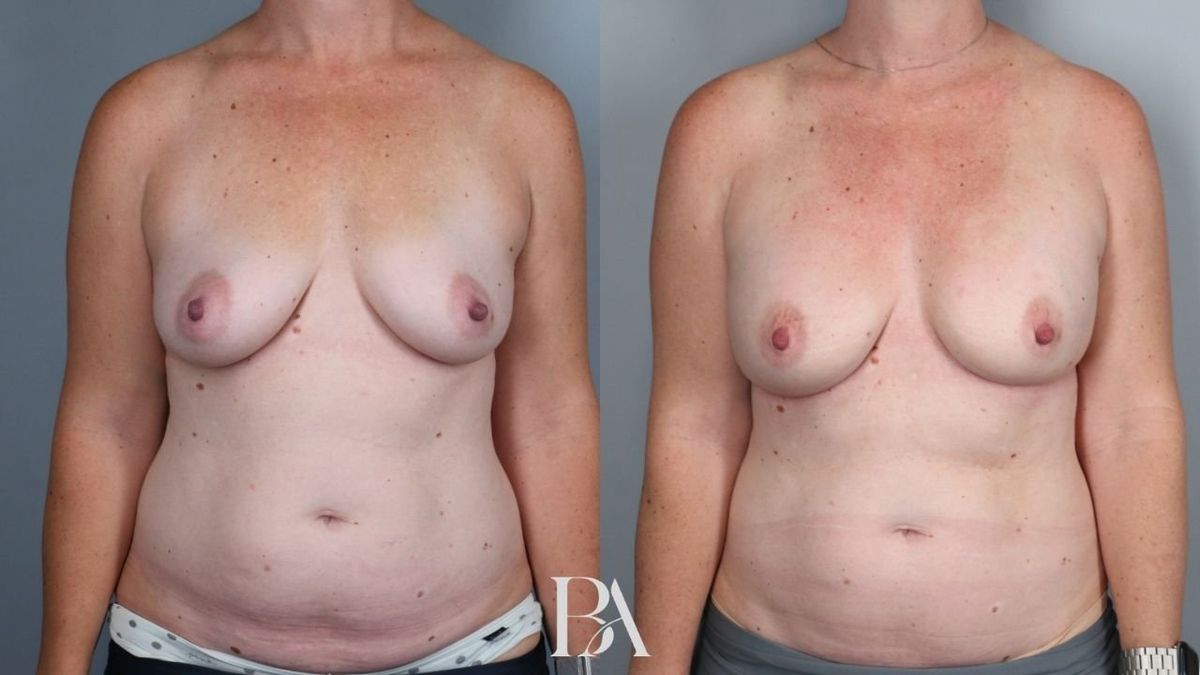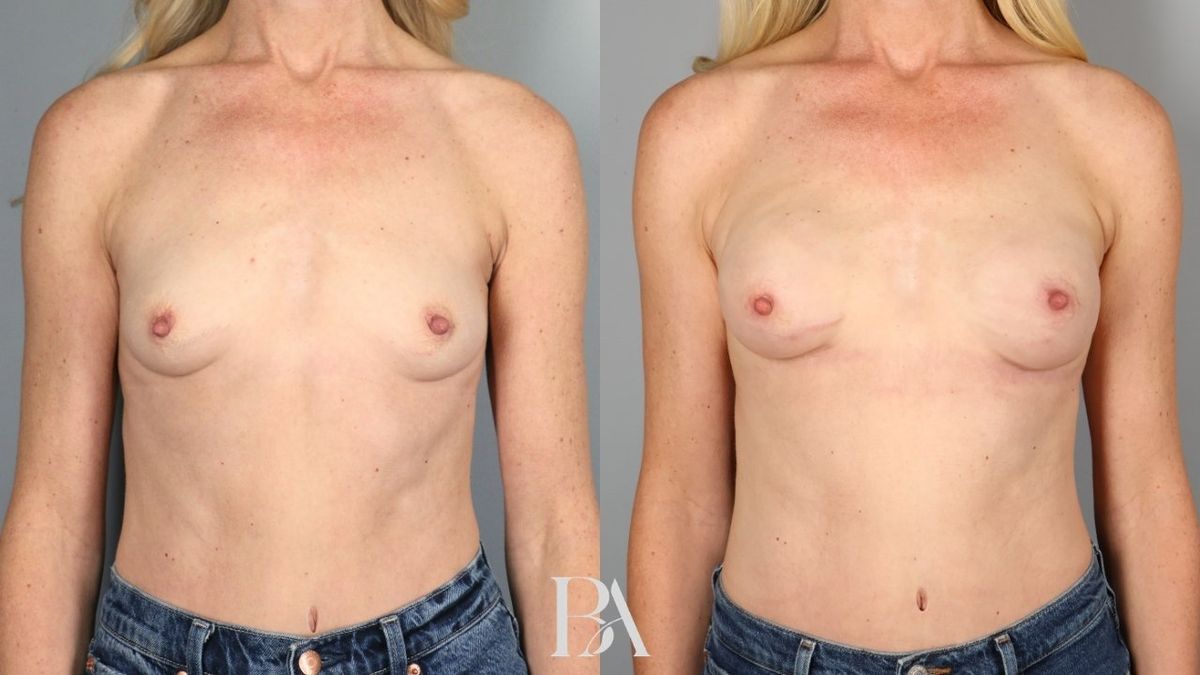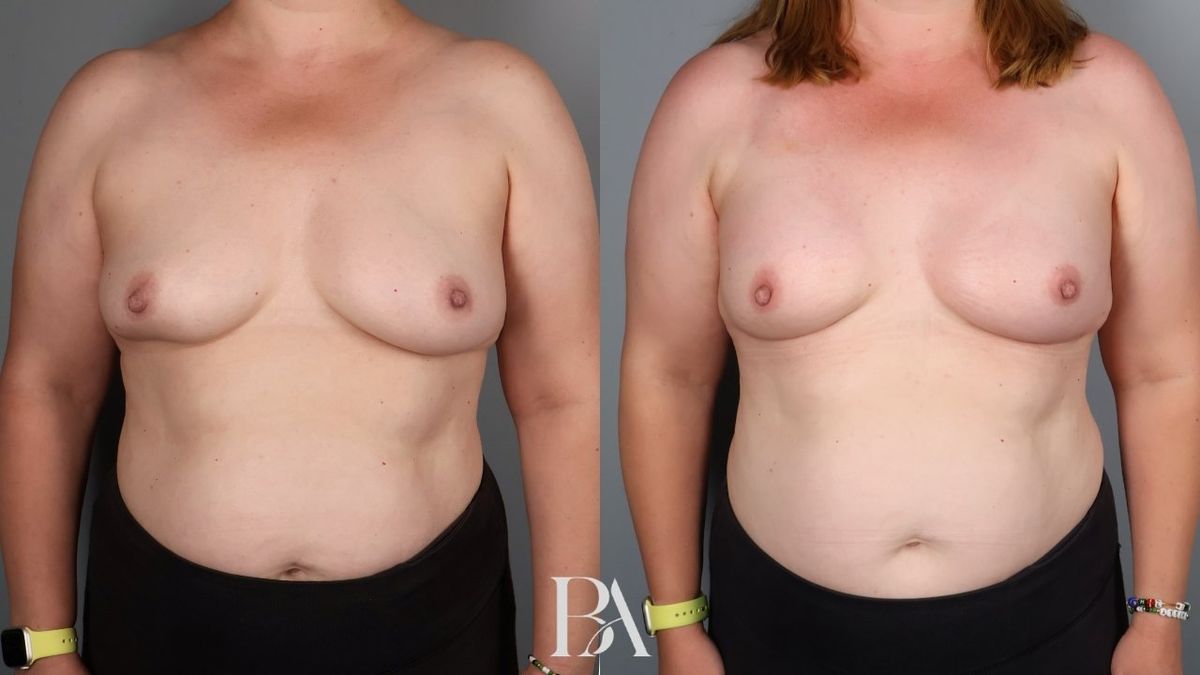
Case #1208
Direct-to-Implant Reconstruction
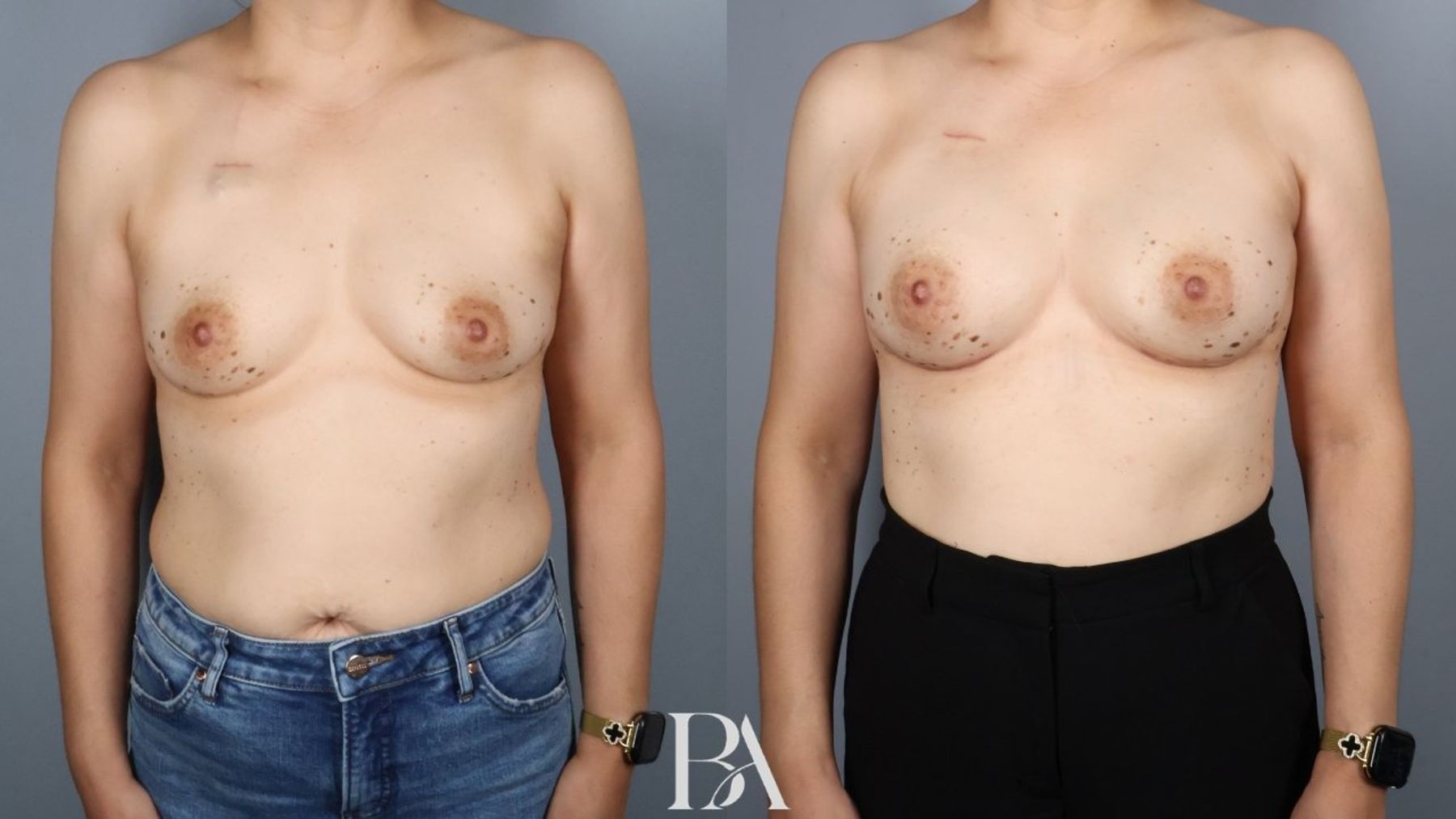
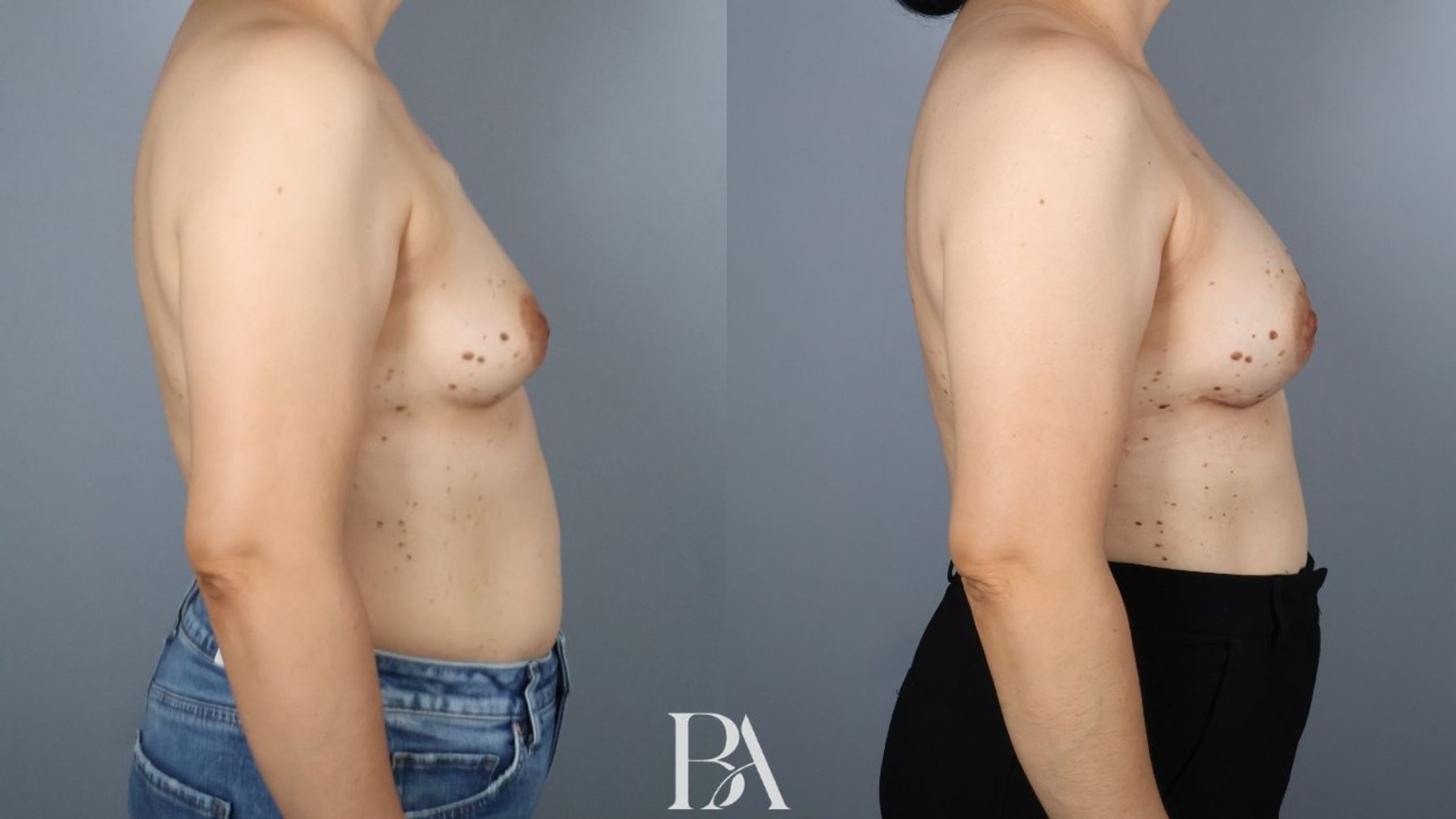
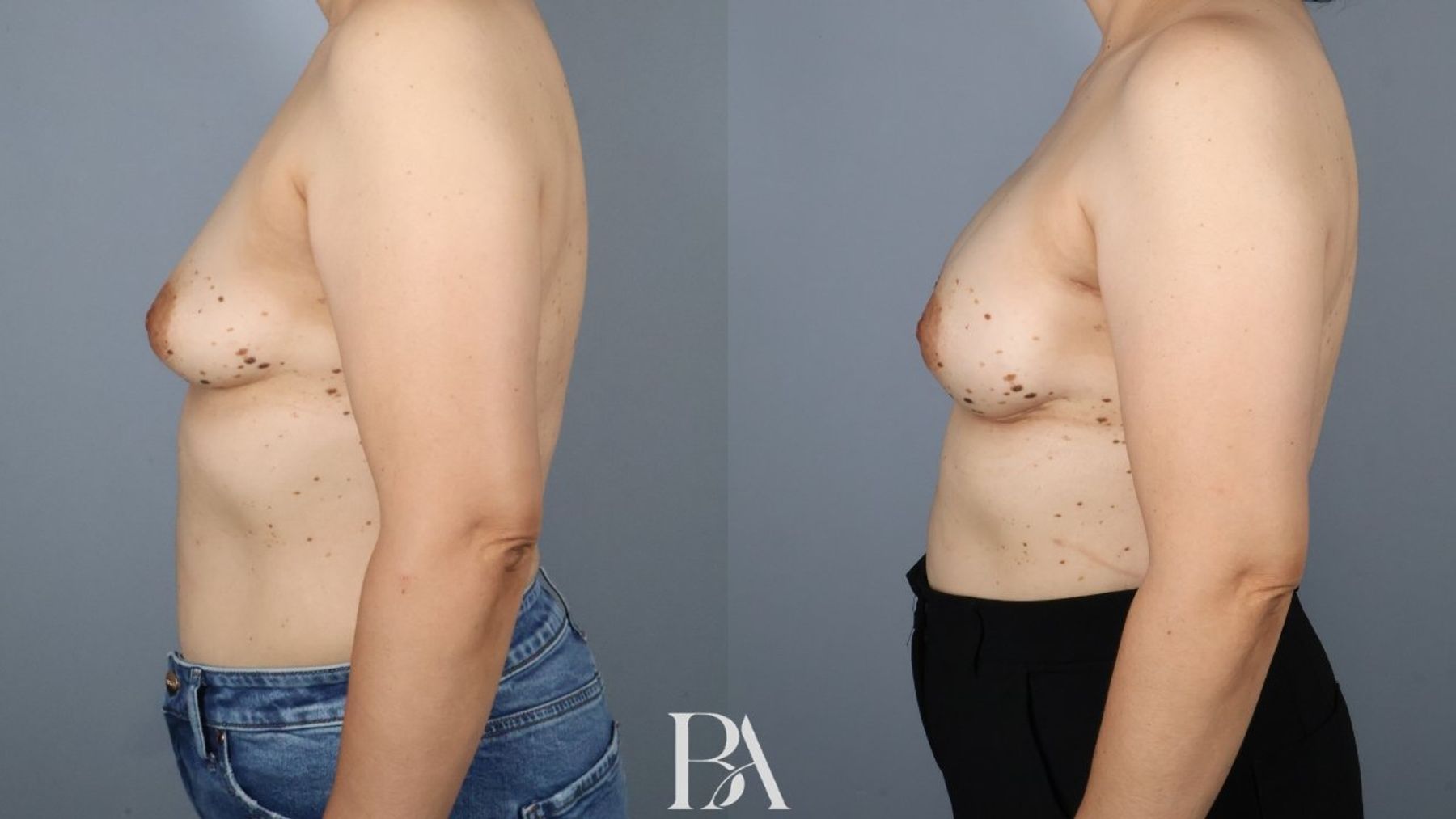
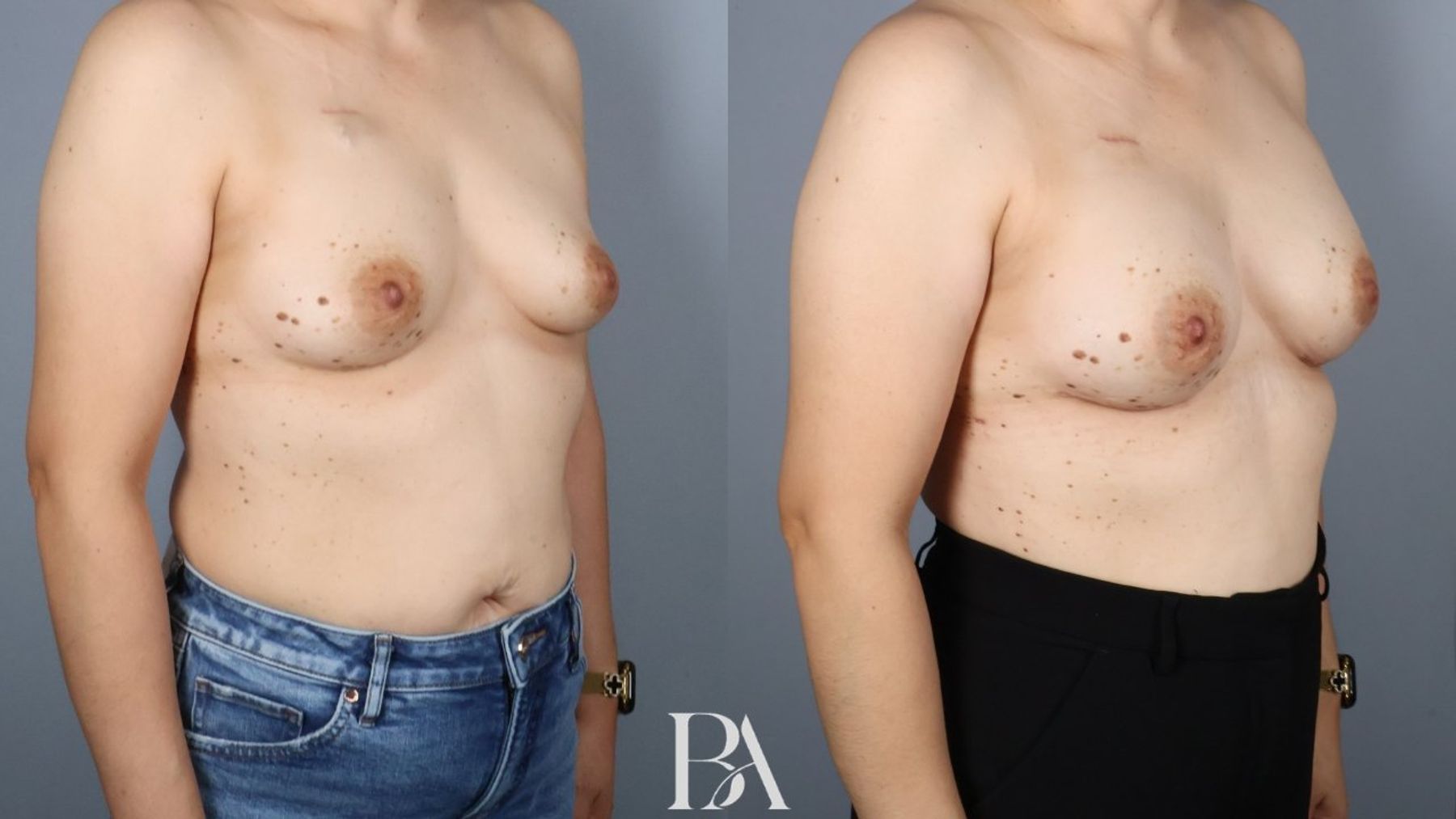
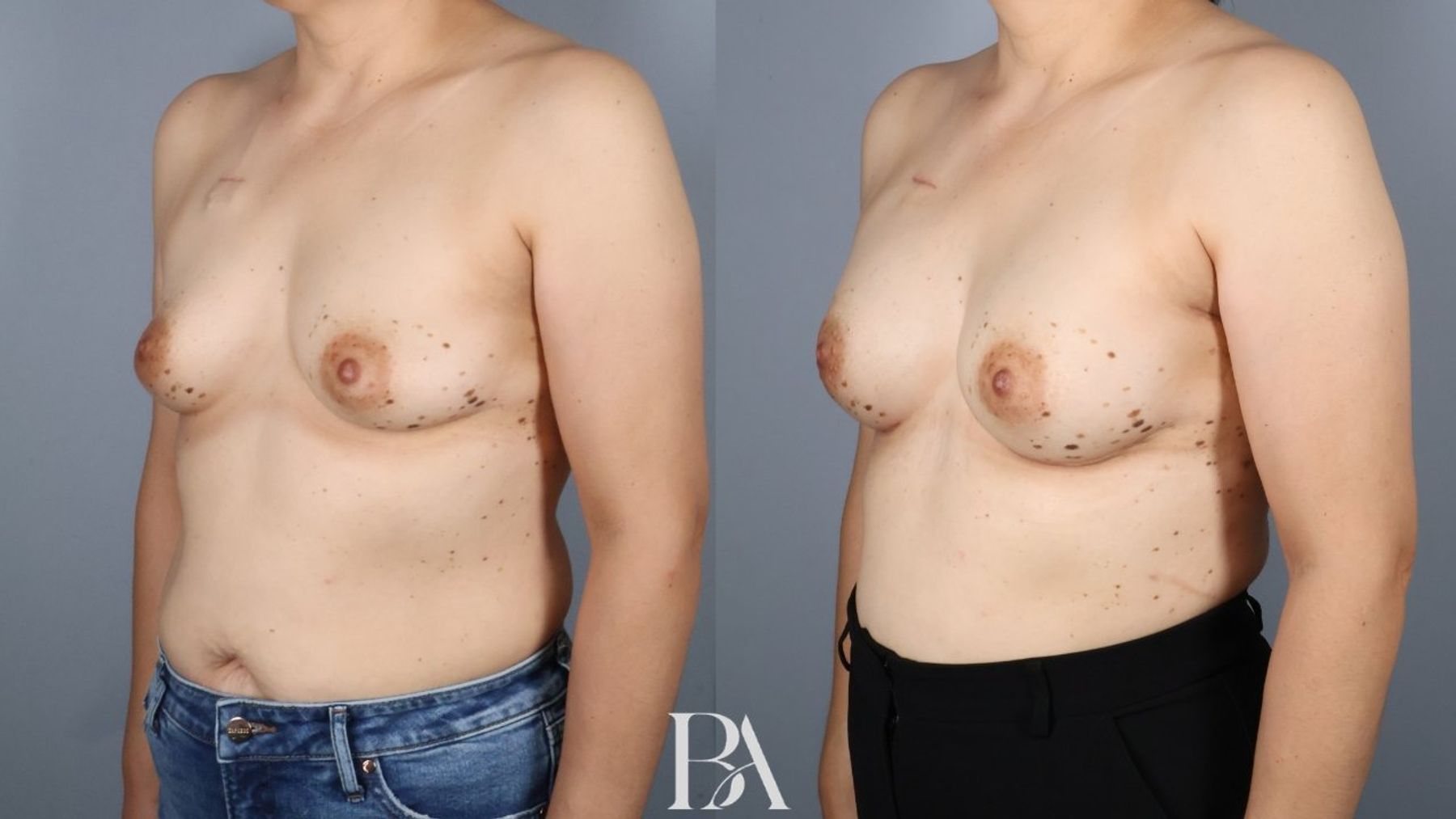
A woman in her 40s with left breast cancer underwent bilateral nipple-sparing mastectomy with single-stage implant reconstruction using 345cc moderate profile smooth round silicone implants above the muscle.
A woman in her 40s with left breast cancer underwent bilateral nipple-sparing mastectomy. Dr. Azadgoli performed single-stage, implant-based reconstruction at the same operation, using 345cc moderate profile smooth round silicone implants with scaffold support, placed above the muscle (prepectoral).
Why this approach
The decisions that shaped this surgical plan.
- Oncology and reconstruction planned together rather than in sequence — the mastectomy pattern was selected to leave the best possible foundation for the reconstructive technique that followed.
- Both sides treated in the same session — symmetric planning, identical tissue handling, and matched final contour are easier to achieve in one operative window than in two.
- Nipple-sparing technique reflects what the oncologic team and surgical plan determined was safe; it sets up a cleaner reconstructive result.
Pre-op preparation
What to do before surgery. Specific to this case.
- Discontinue blood thinners (NSAIDs, aspirin, fish oil, vitamin E) two weeks out. Acetaminophen remains safe; the full list is reviewed at pre-op.
- No nicotine for 6 weeks before through 6 weeks after surgery. The vascular impact directly affects skin healing.
- Arrange button-front or zip-front tops for the first three weeks — overhead reaching is restricted. A drain holder or apron is provided.
- Confirm a driver for surgery day and a companion who can stay through the first night.
- Oncology results, imaging, and any chemotherapy timing reviewed in the pre-op visit. All coordination is handled in-house.
Recovery timeline
Milestones specific to this case. Individual recovery varies.
- Day 1–7
First week prioritizes drain care, walking short distances, and avoiding any overhead reaching. Multi-modal pain control keeps narcotic use brief.
- Week 2
Most patients have drains removed midweek. Showering rules relax. Early lymphatic work starts once the surgical team clears it.
- Week 4
Return to most low-impact activity. Scar massage, compression, and skincare protocols pick up.
- Week 6
Standard clearance milestone. Patients return to most exercise, gym work, and sleeping in any position.
- Month 3
First major reconstruction assessment. Tissue softens, surveillance imaging if indicated coordinates here.
- Month 6
Final aesthetic emerges. Last-mile adjustments (fat grafting, nipple reconstruction) typically scheduled now.
Continued care
Recommended aftercare, skincare, and MedSpa services for Direct-to-Implant Reconstruction.
- Compression bra continuously for 6 weeks
- Drain care taught before discharge; removed when output is low (typically 1–2 weeks)
- Sleep elevated on your back for 2 weeks
- No lifting above 10 lb for the first 3 weeks
- Follow-up imaging coordinated with the oncology team
- Medical-grade silicone sheeting on the mastectomy incision
- SkinCeuticals C E Ferulic for scar healing
- SPF 50+ on incisions for 12 months
- Priority lymphatic drainage starting week 1
- LED light therapy weekly for the first 8 weeks
- Fractional laser for scar refinement after 3 months
- Aftercare
Hyperbaric oxygen series extended to 10–15 sessions for bilateral tissue support.
Bilateral procedures heal more reliably with sustained HBOT.
- Coordination
Long-term surveillance imaging stays on the oncology pathway; our team coordinates timing with theirs.
Post-mastectomy patients stay on a long-term surveillance pathway.
- Aftercare
Priority lymphatic drainage starting week 1.
Lymphatic disruption from axillary work makes early drainage more valuable.
- MedSpa
Tissue-tightening protocol (fractional laser) postponed until month 6 on the reconstructed side.
Reconstructed tissue softens more slowly than primary breast surgery.