Case #1209
Breast Reconstruction Revision
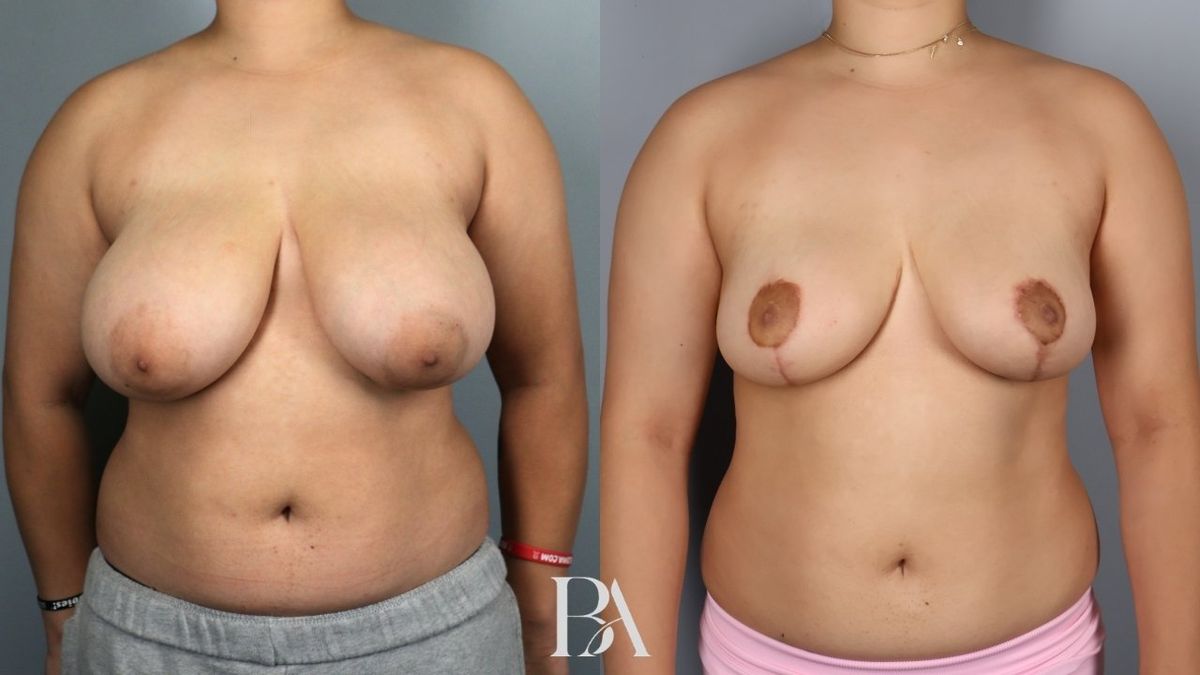
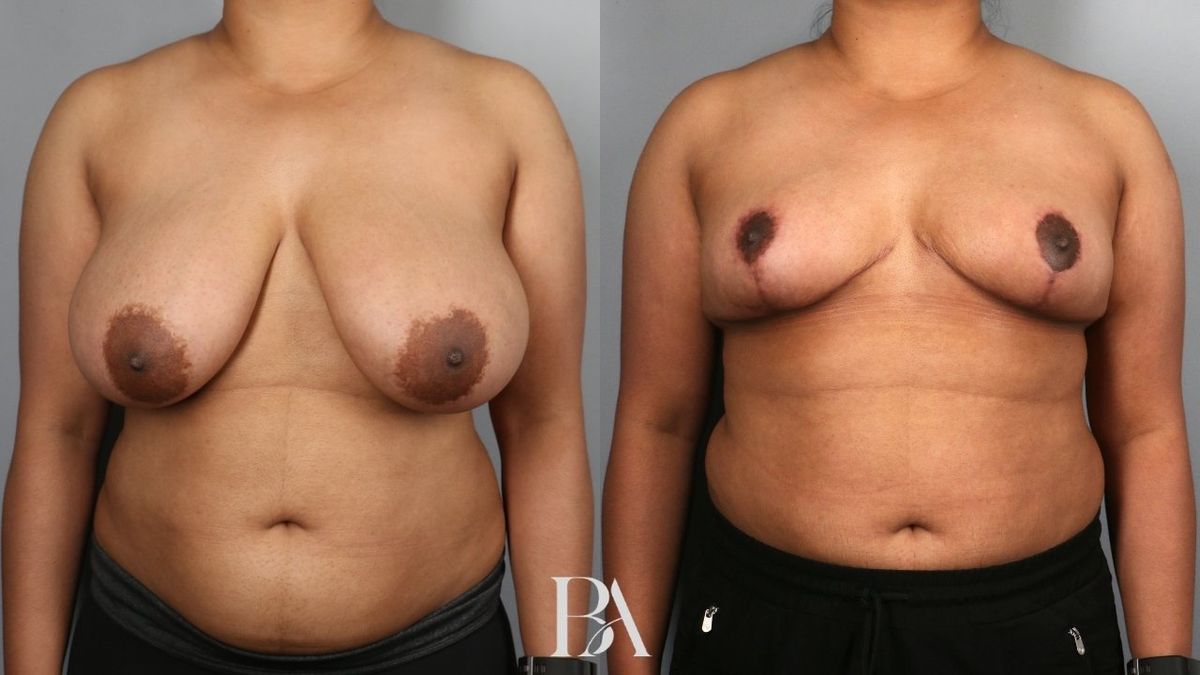
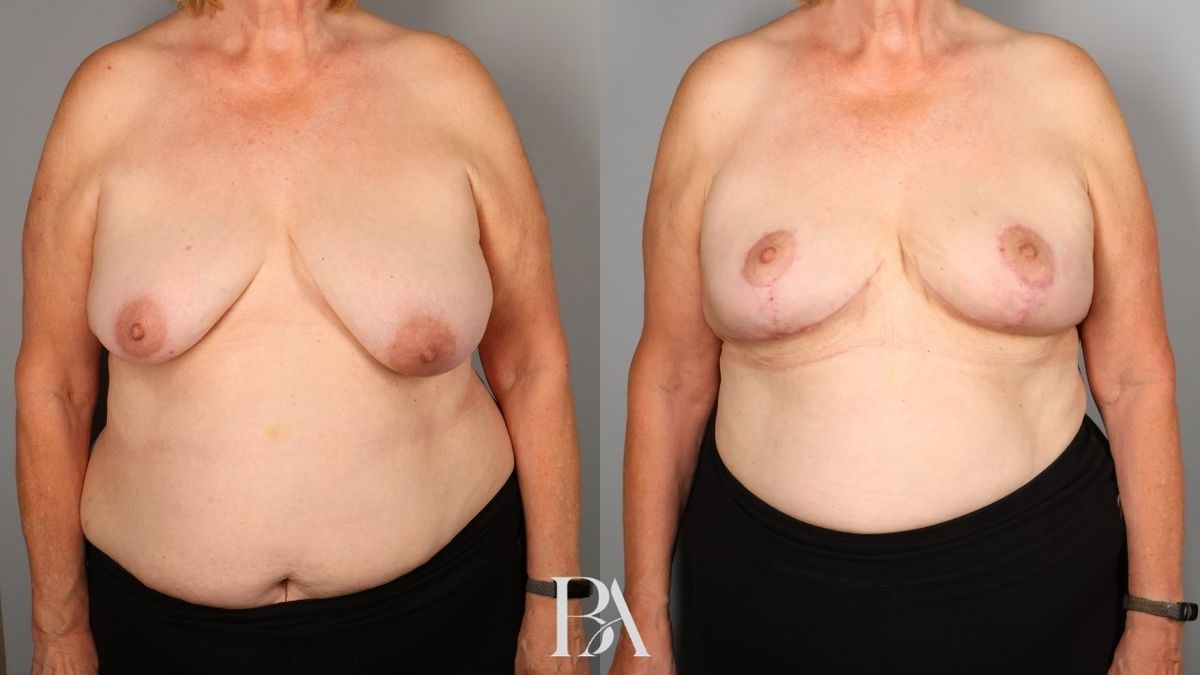
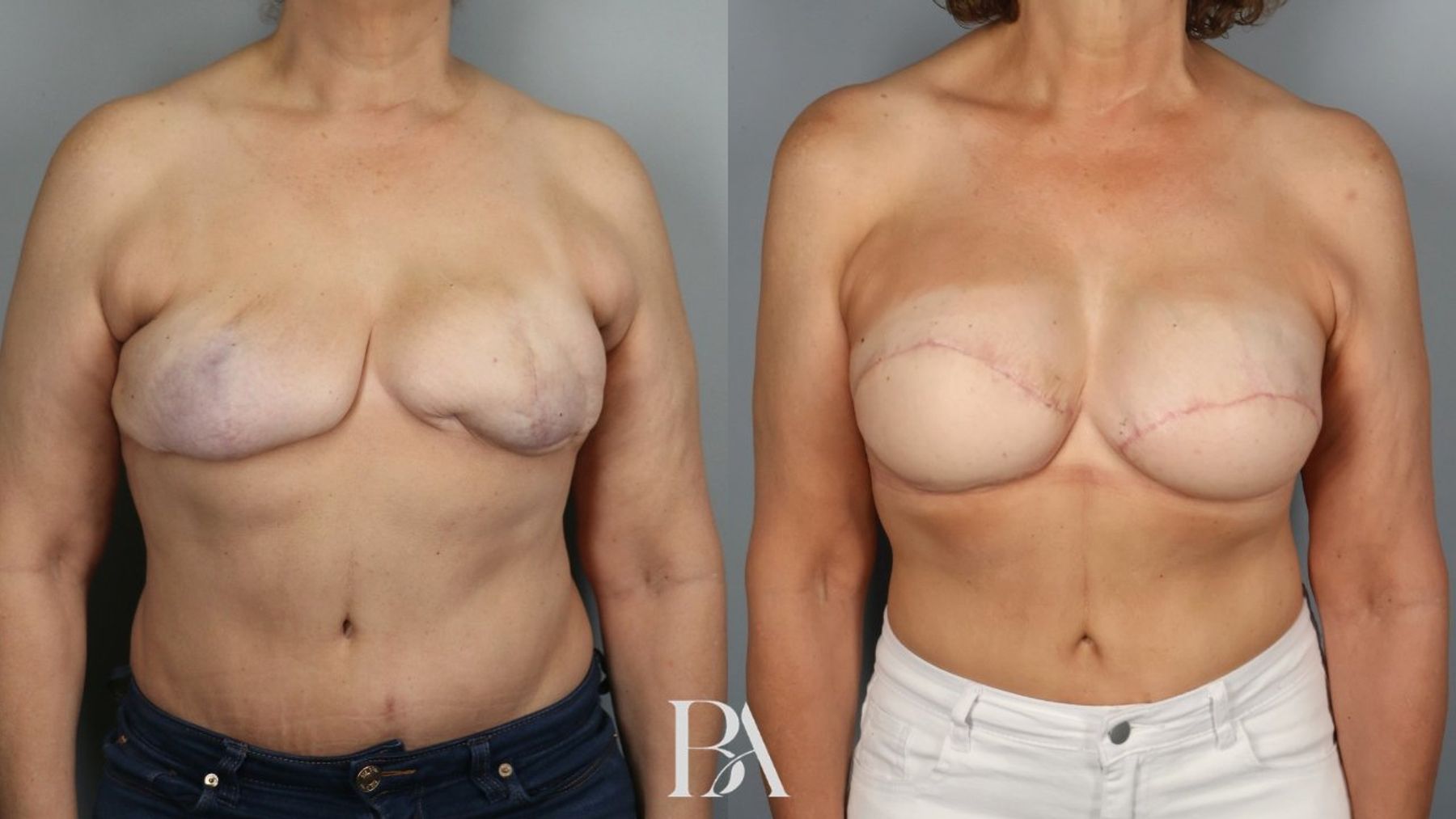
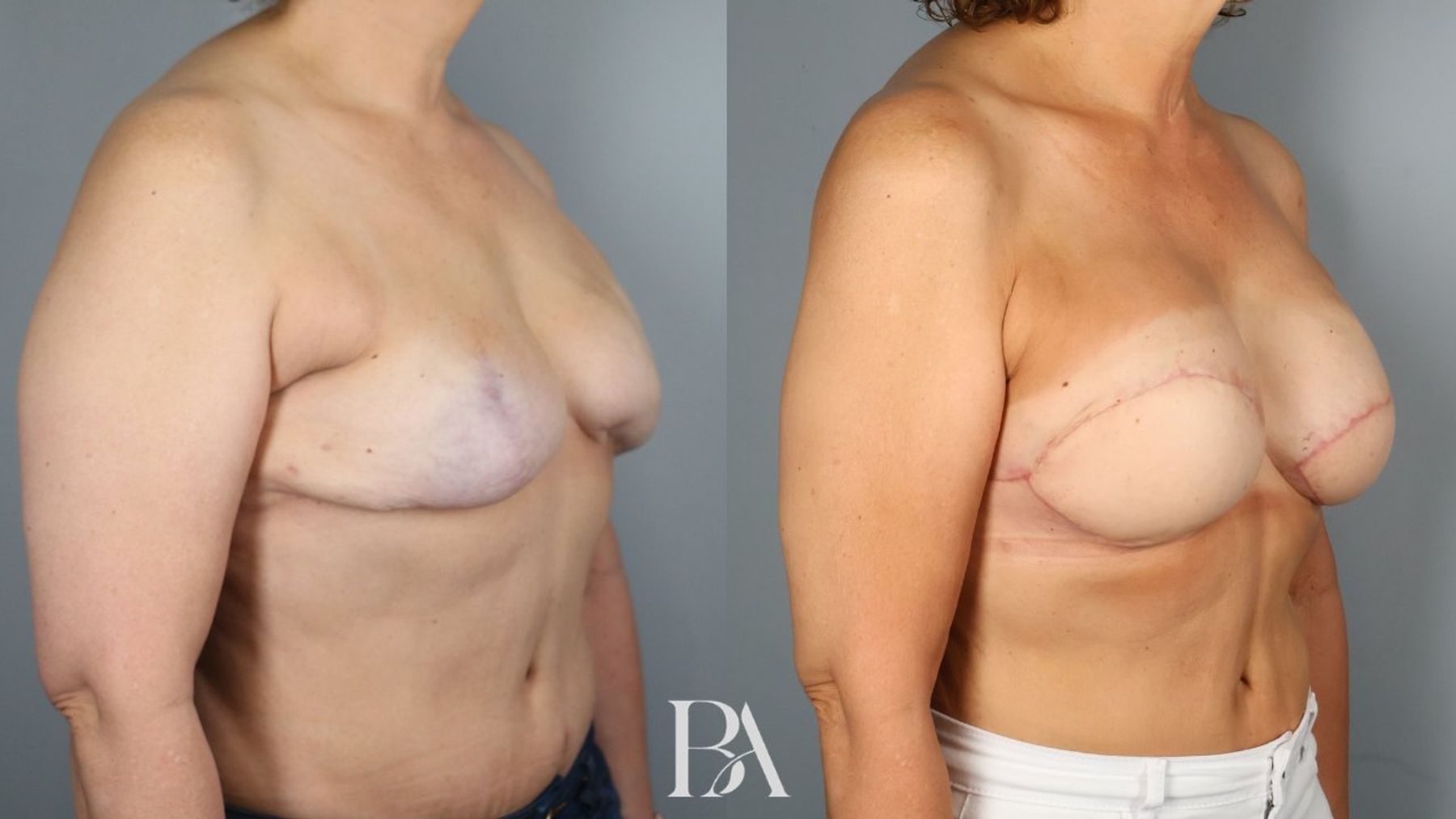
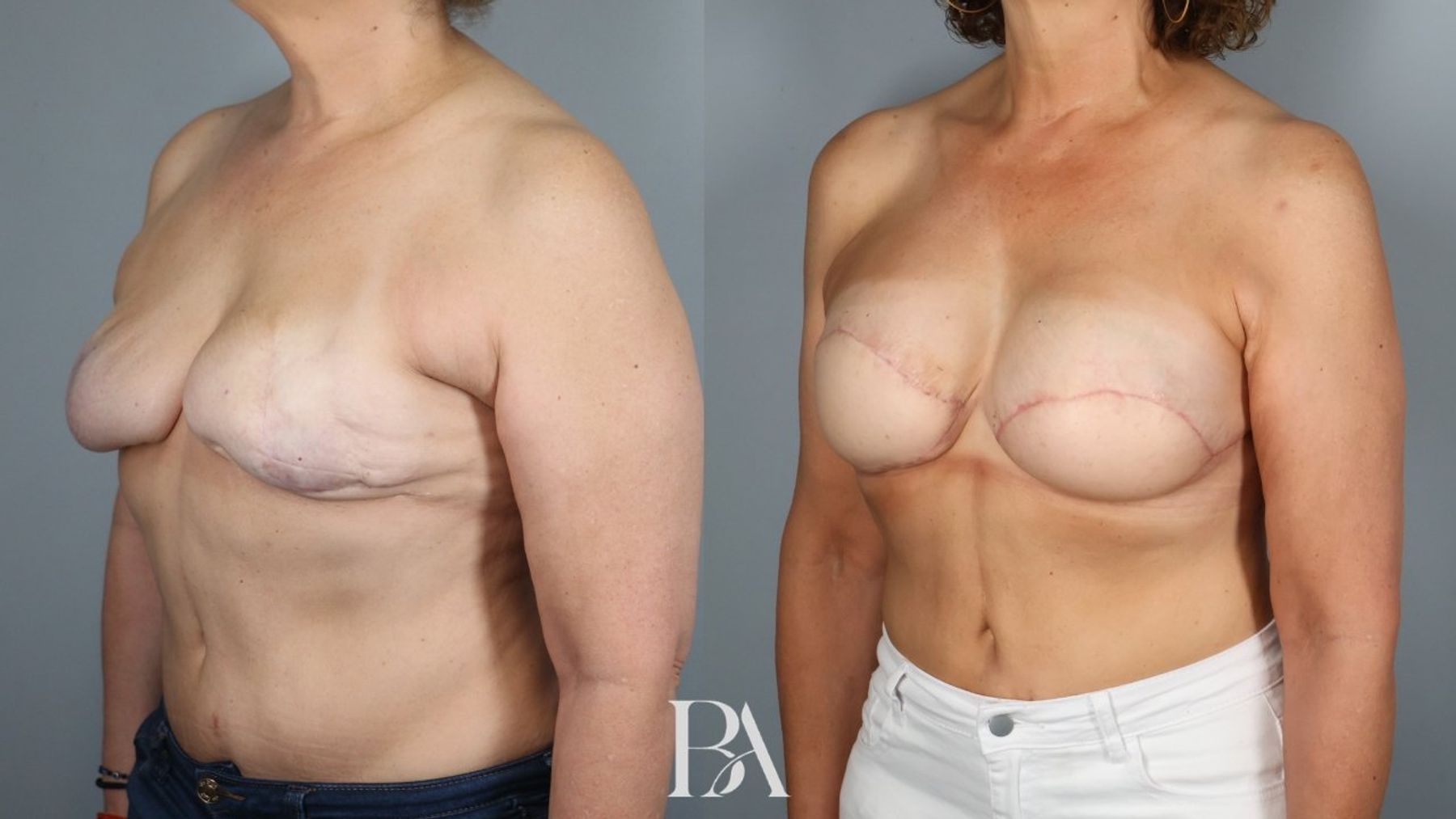
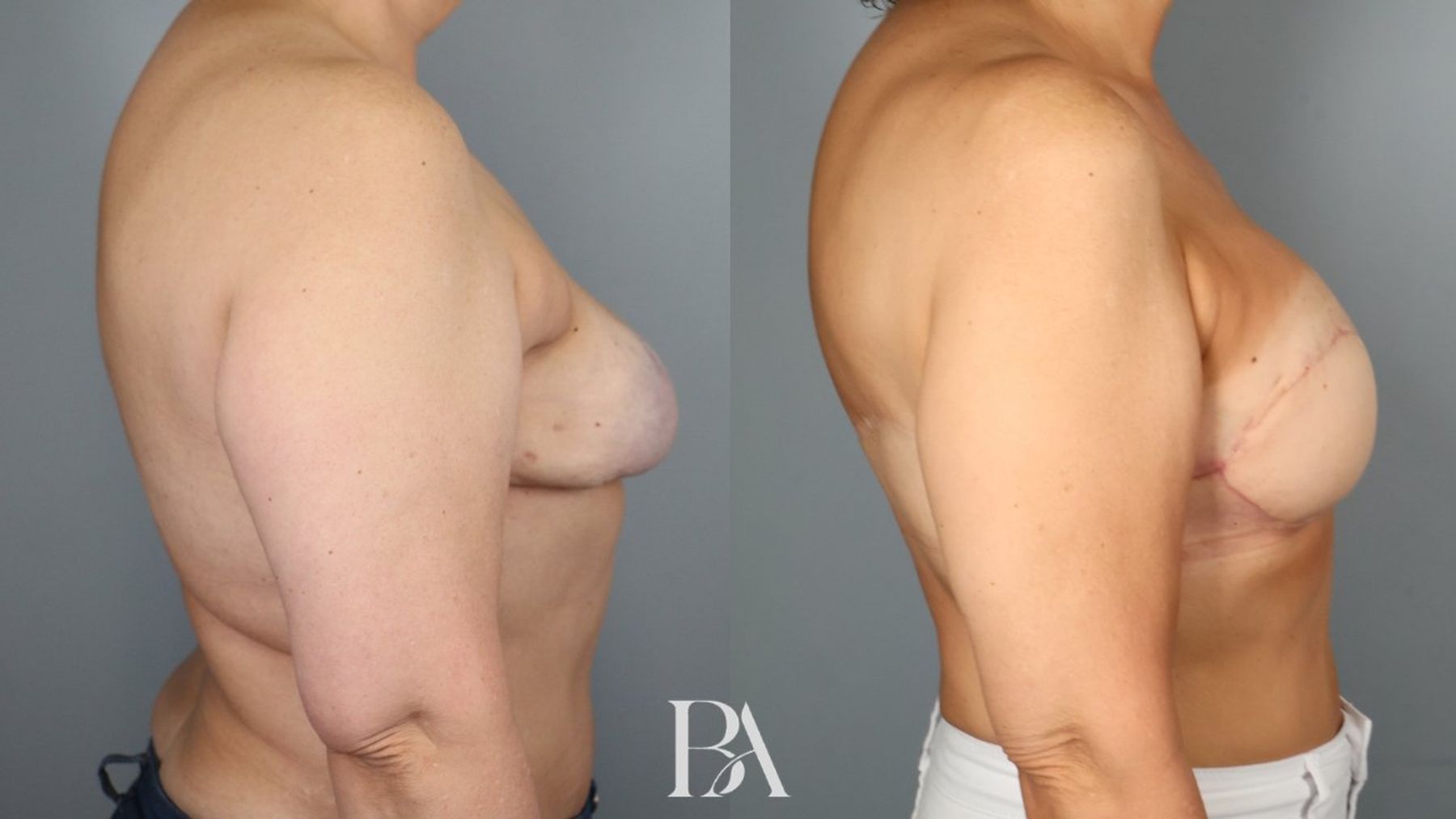
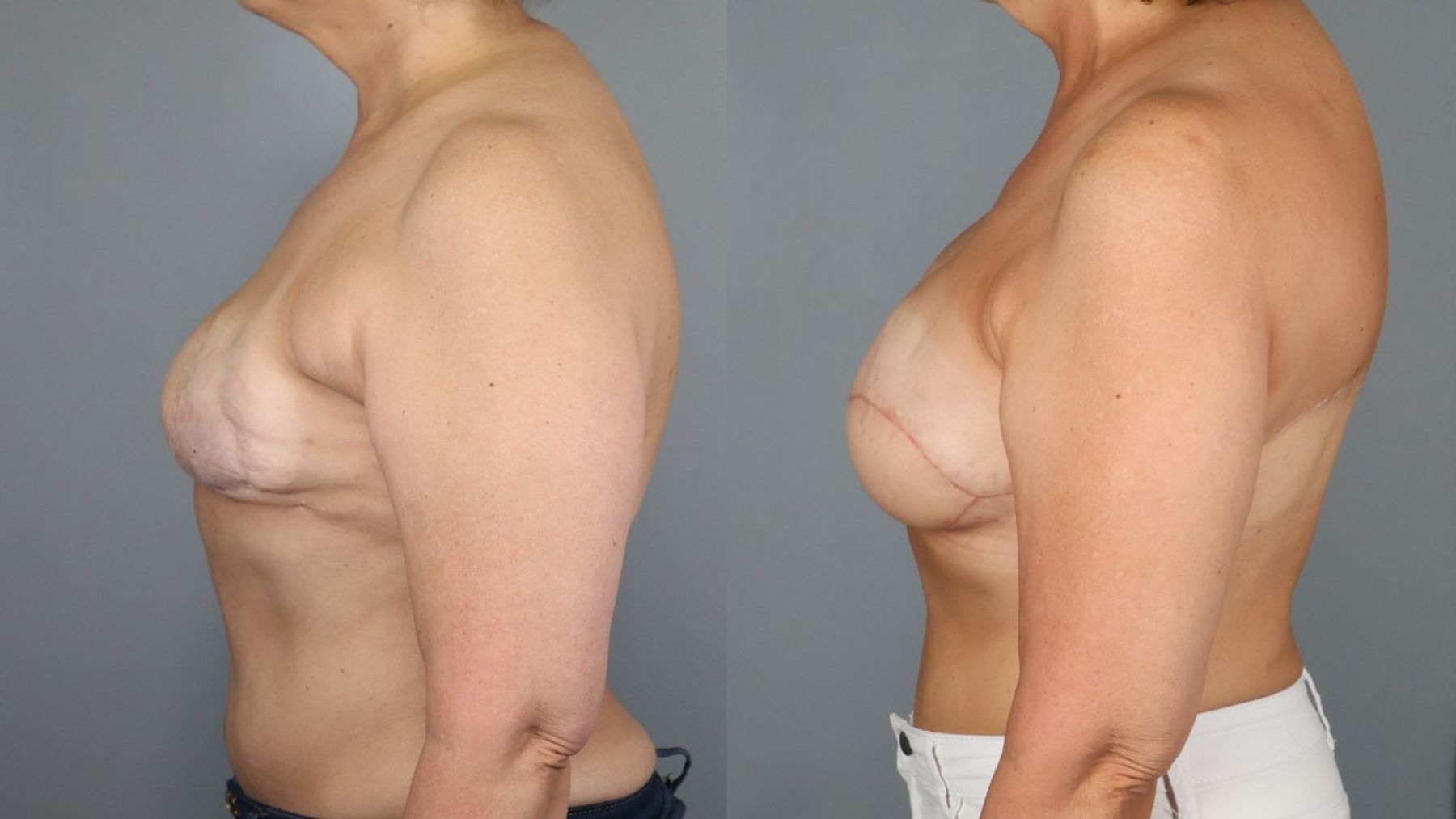
A woman in her 50s had distorted, asymmetric implant reconstructions with near-exposed implants after multiple surgeries elsewhere. Dr. Azadgoli performed revision reconstruction with latissimus dorsi muscle flaps and new implants beneath them.
A woman in her 50s had left breast cancer treated with mastectomy and bilateral implant-based reconstruction by another surgeon. Complications led to loss of both nipples and multiple revision surgeries and implant exchanges, leaving distorted, asymmetric breasts with implants that were nearly exposed. Dr. Azadgoli performed revision breast reconstruction using pedicled latissimus dorsi muscle flaps from the back, with new implants placed beneath the flaps. Photos are de-identified.
Why this approach
The decisions that shaped this surgical plan.
- Revision case — prior tissue patterns, scar locations, and anatomical changes from the first procedure all factored into the surgical plan.
- Bilateral approach chosen to keep the planning, the tissue response, and the aesthetic outcome consistent between sides.
Pre-op preparation
What to do before surgery. Specific to this case.
- Stop NSAIDs, aspirin, and high-dose fish oil two weeks before surgery; the surgical team provides a full medication list at the pre-op visit.
- Full nicotine cessation 6 weeks pre- and post-op. This includes vapes and nicotine replacement products; the constriction effect is the same.
- Arrange button-front or zip-front tops for the first three weeks — overhead reaching is restricted. A drain holder or apron is provided.
- A driver is required the day of surgery and a responsible adult should stay with you the first 24 hours.
Recovery timeline
Milestones specific to this case. Individual recovery varies.
- Day 1–7
Bilateral healing takes a slower start. Expect more chest-wall fatigue through day 5 and a stricter no-lifting rule for the first 10 days.
- Week 2
Patients off prescription pain medication, walking 1–2 miles daily, and back to most light household activity.
- Week 4
Light cardio and most desk-work activities cleared. Lifting limit increases to 15 lb. Scar massage typically starts now.
- Week 6
Most physical restrictions lift. Return to strength training, full-impact cardio, and overhead lifting.
- Month 3
Tissue softens, scars begin to fade, and overall shape settles toward final. Scar maturation continues for another 6 months.
- Month 6
Revised tissue softens on a longer timeline. Final shape and scar appearance continue to mature through month 12.
Continued care
Recommended aftercare, skincare, and MedSpa services for Breast Reconstruction Revision.
- Compression bra as directed, typically 2–6 weeks depending on the procedure
- Limit upper-body lifting for 3–4 weeks
- Scar management protocol at 3 weeks
- Gentle massage of fat-grafted areas if directed
- Medical-grade silicone sheeting on revised scars
- SkinCeuticals C E Ferulic for scar healing
- SPF 50+ on incisions for 12 months
- LED light therapy weekly for the first 8 weeks
- Lymphatic drainage if swelling persists
- Fractional laser for scar refinement after 3 months
- Aftercare
Extended hyperbaric oxygen course (10–15 sessions) to support bilateral healing.
Bilateral procedures heal more reliably with sustained HBOT.
- Aftercare
Active scar treatment delayed by 2 weeks to give revised tissue more time to settle.
Revised tissue tolerates active treatment less well than primary cases.
- Skincare
Extended scar protocol (silicone + paper-tape compression) runs through month 3.
Revised scars respond best to sustained, layered pressure therapy.