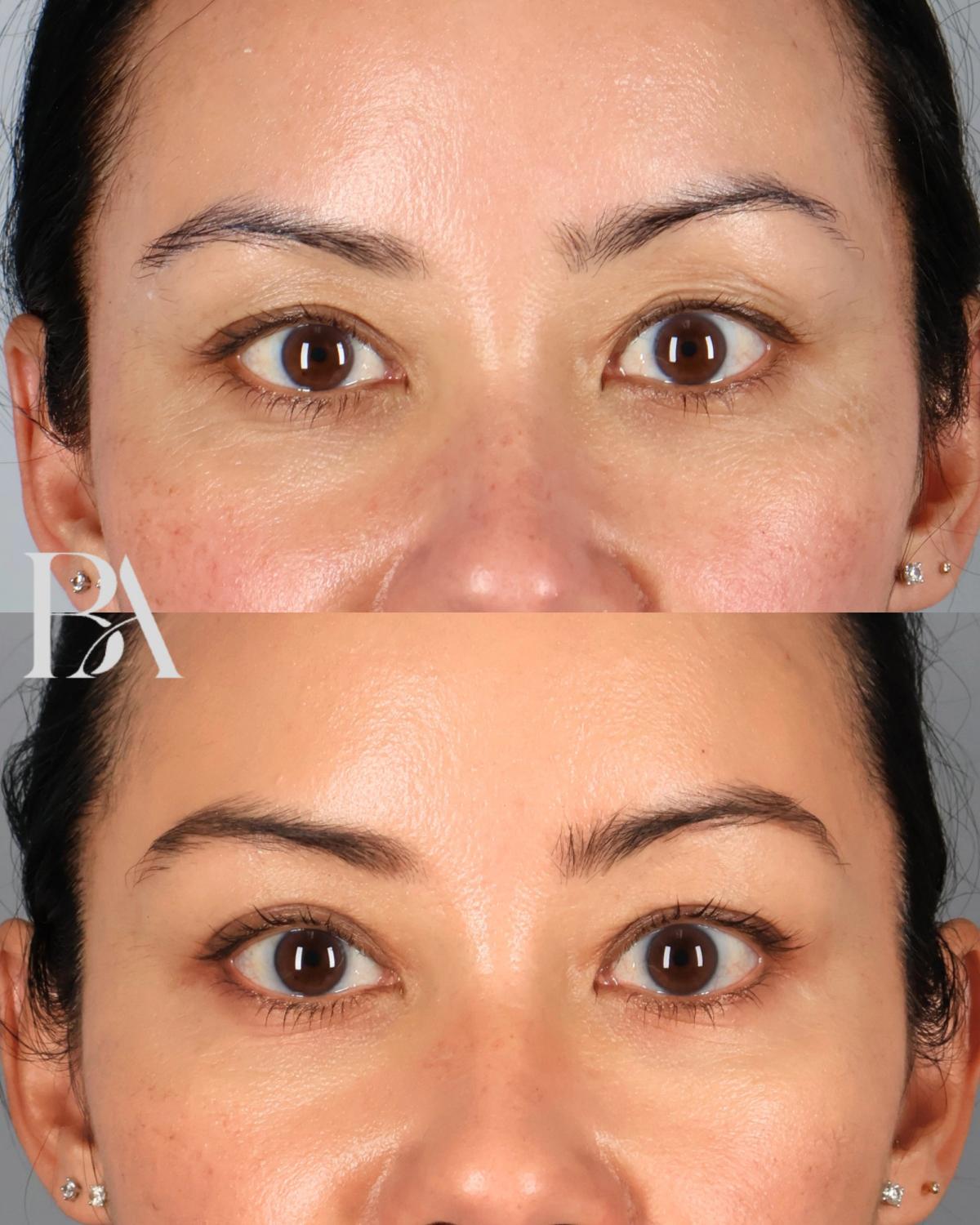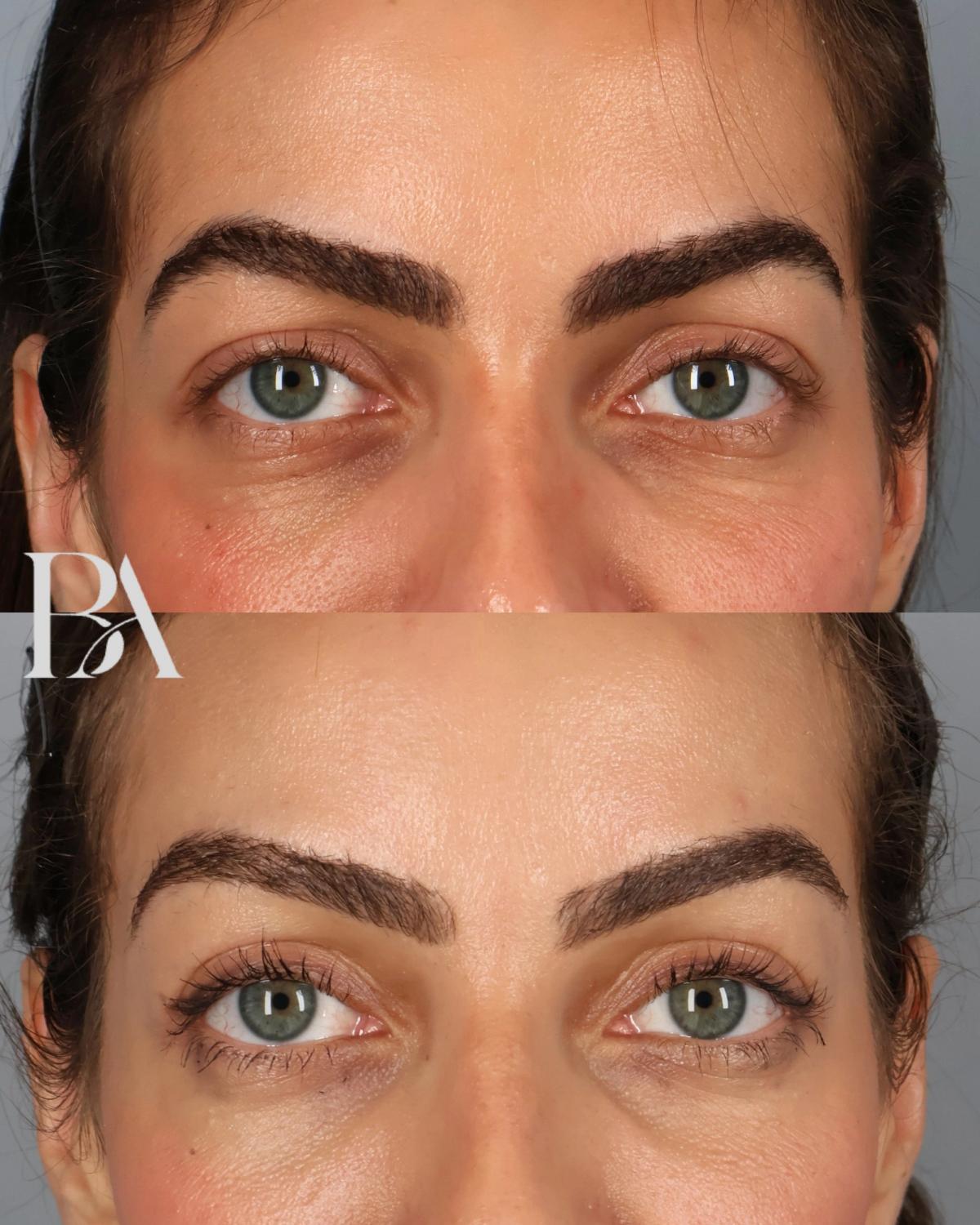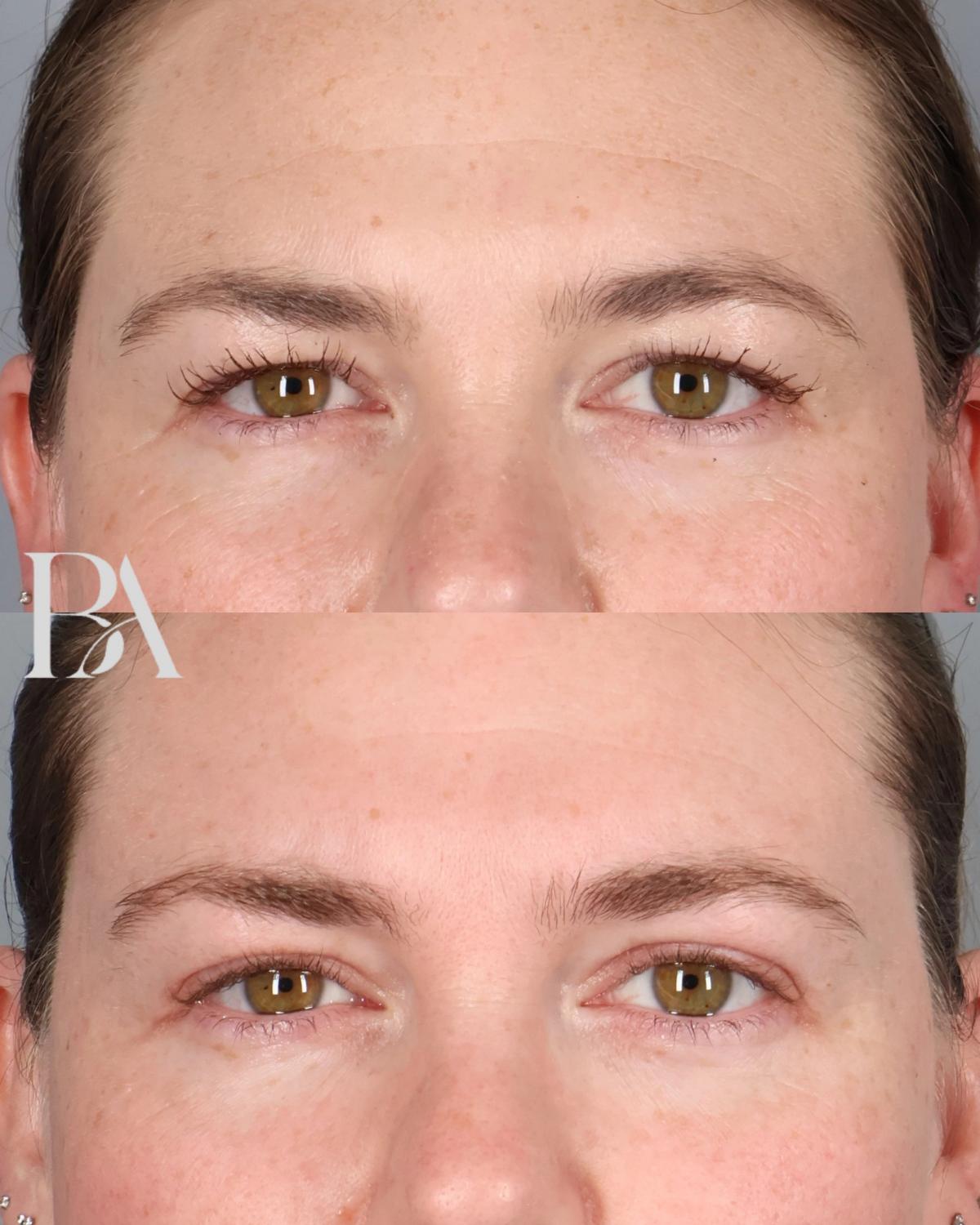
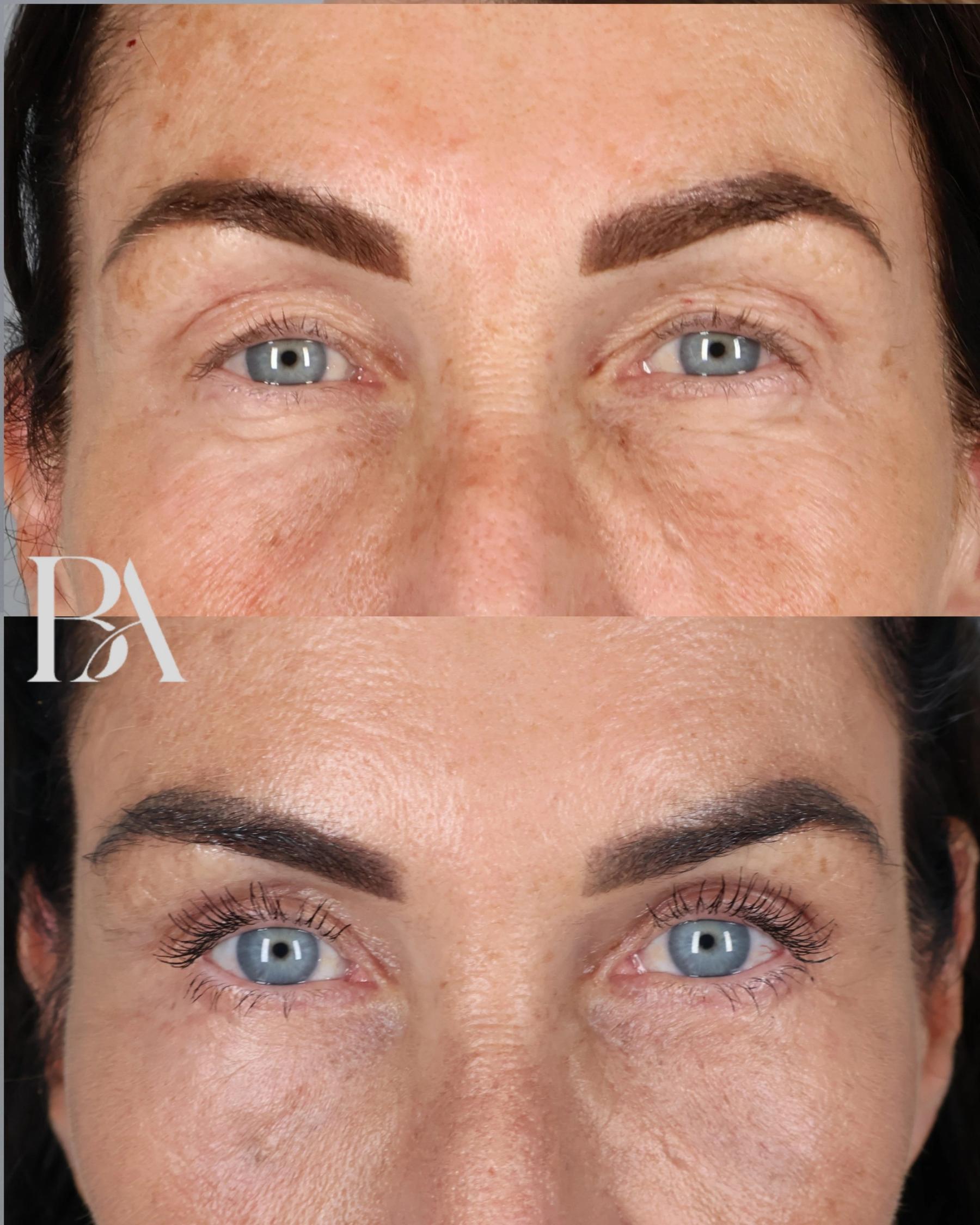
Case #2003
Upper Blepharoplasty
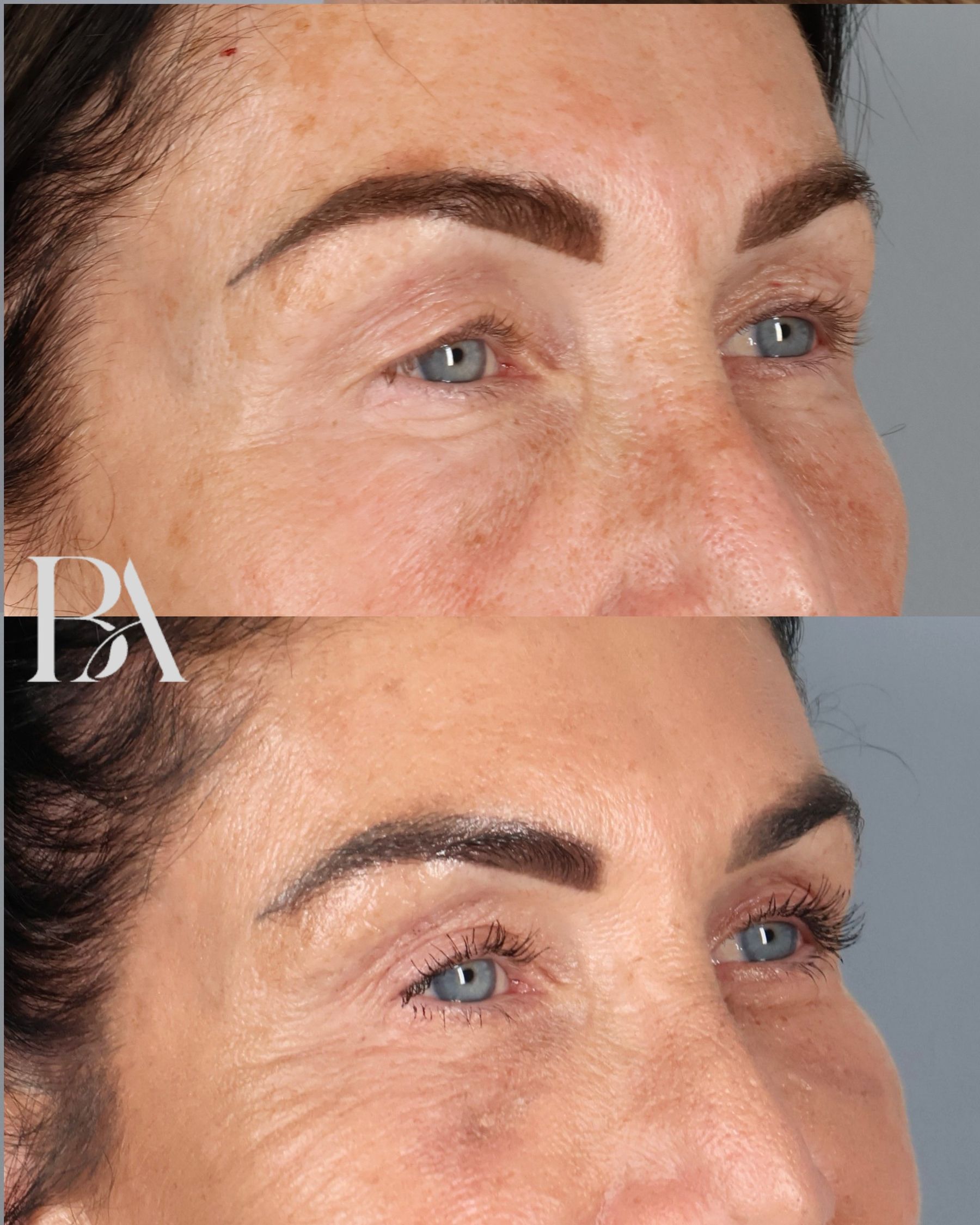
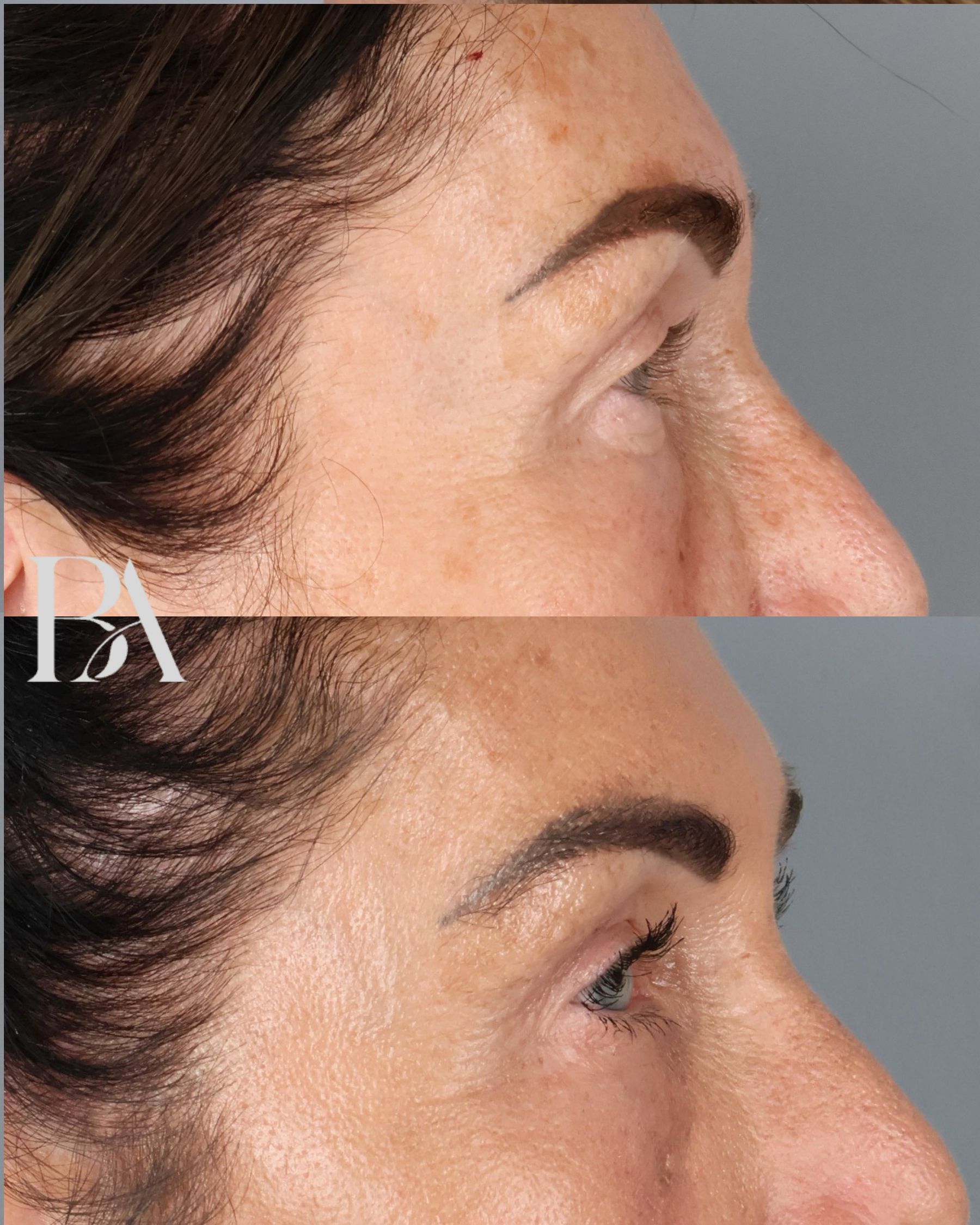
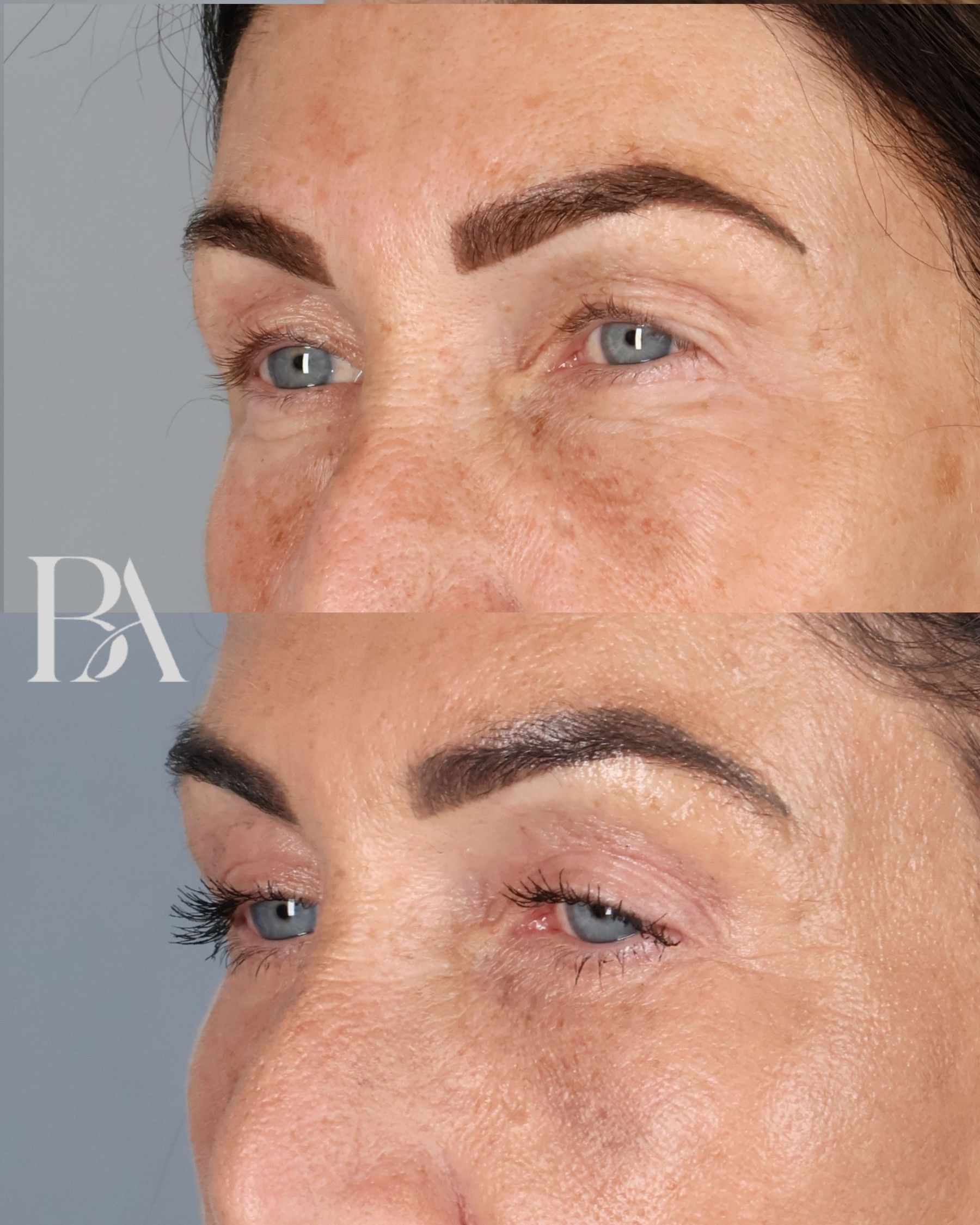
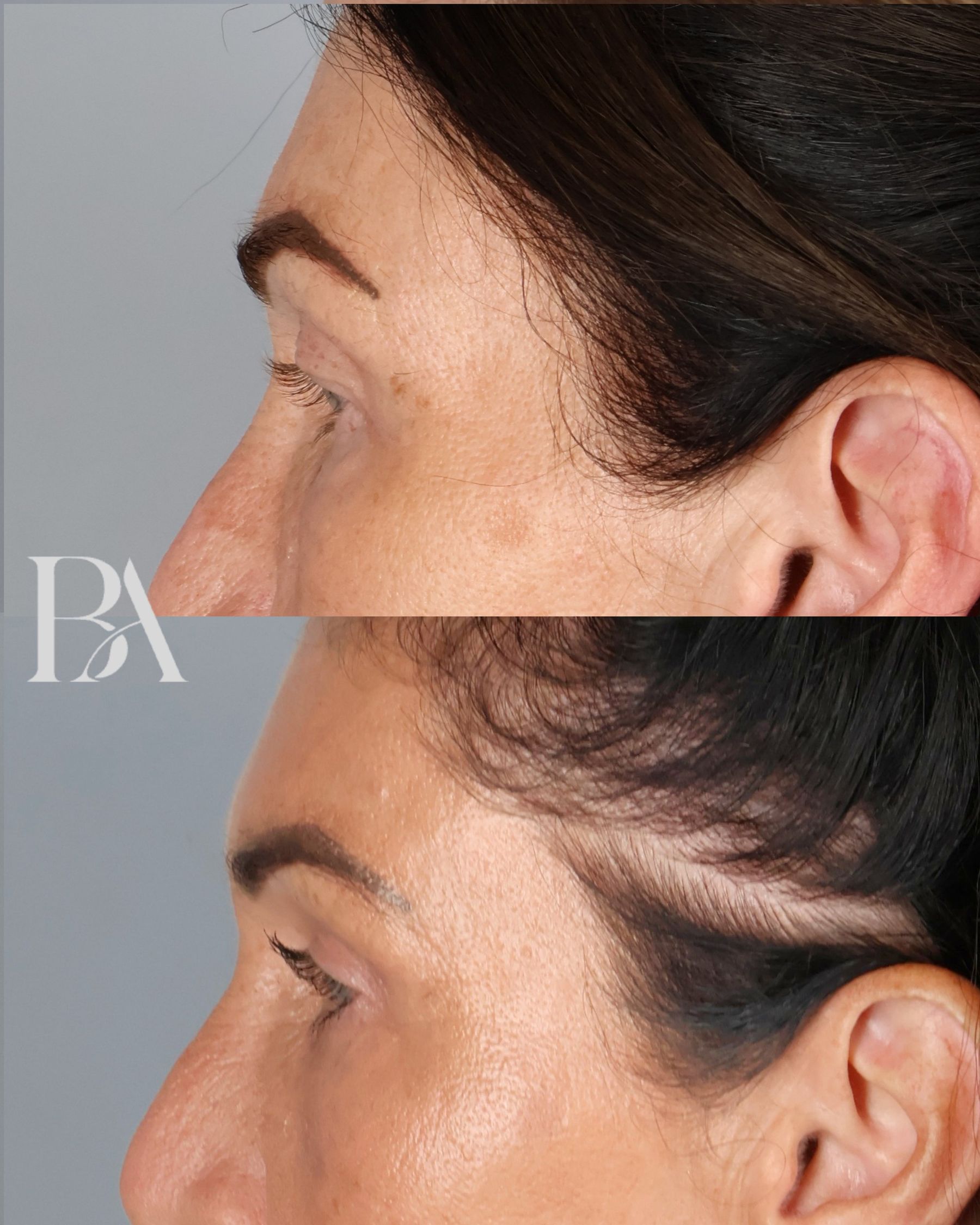
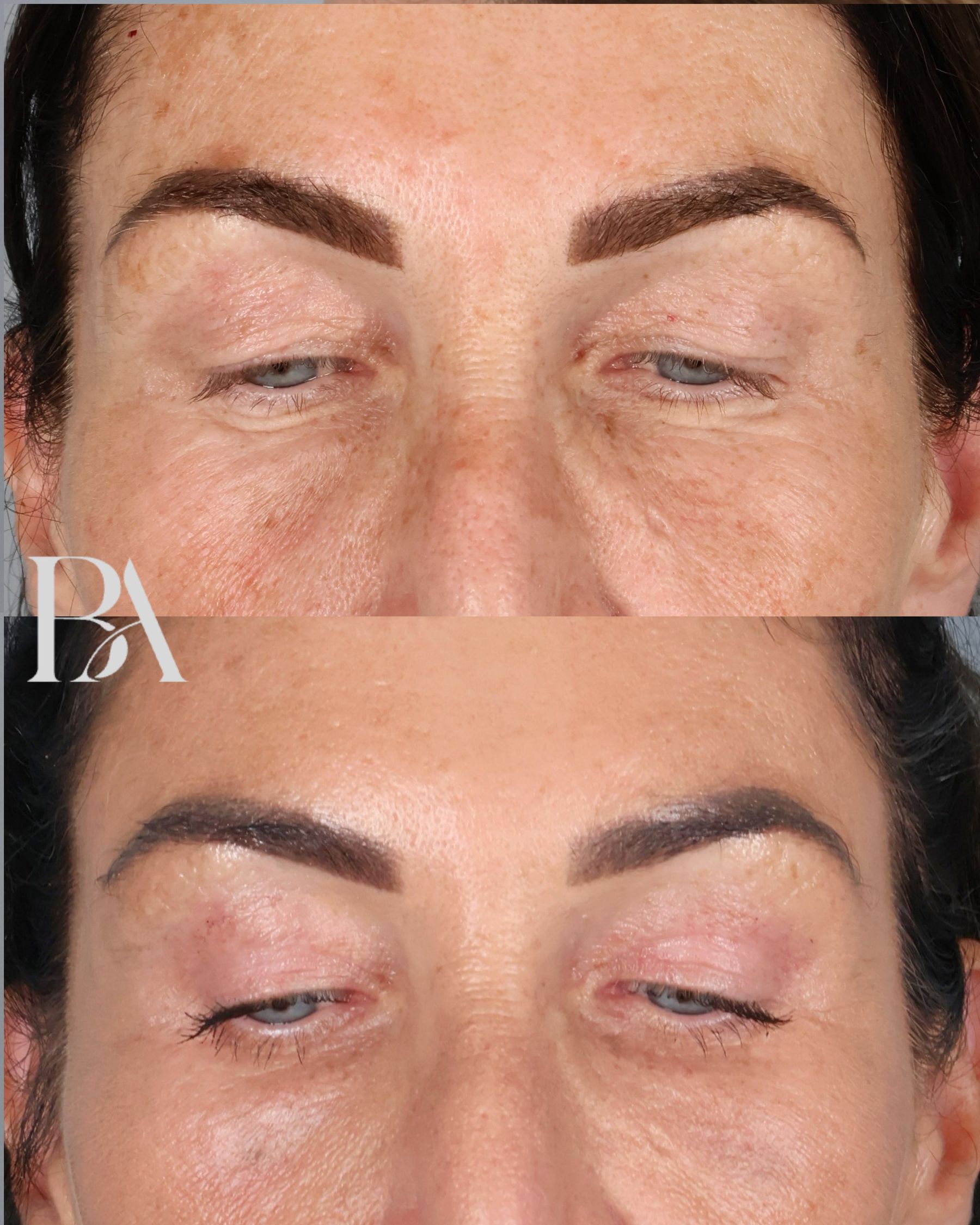
Pre-op preparation
What to do before surgery. Specific to this case.
- Stop NSAIDs, aspirin, and high-dose fish oil two weeks before surgery; the surgical team provides a full medication list at the pre-op visit.
- Full nicotine cessation 6 weeks pre- and post-op. This includes vapes and nicotine replacement products; the constriction effect is the same.
- Sleep elevated for the first week. Stock the kitchen with low-sodium soft foods, since chewing comfort and salt-driven swelling both matter early.
- A driver is required the day of surgery and a responsible adult should stay with you the first 24 hours.
Recovery timeline
Milestones specific to this case. Individual recovery varies.
- Day 1–7
Sleep elevated, gentle cold therapy, and quiet voice for the first 3 days. Bruising peaks midweek; swelling is at its most visible.
- Week 2
Sutures or tape come off around day 7–10. Most patients are camera-ready for everyday life by the end of week 2 (lingering swelling, not bruising).
- Week 4
The "I look like myself again" milestone for most. Camera comfort returns. Light cardio and yoga added back.
- Week 6
The "back to normal" week for most patients. Final compression schedule transitions to optional.
- Month 3
The "before/after" shape most people associate with the procedure shows itself in this window.
Continued care
Recommended aftercare, skincare, and MedSpa services for Upper Blepharoplasty.
- Cold compresses for the first 48 hours
- Head elevated for sleeping for 1 week
- No strenuous activity or heavy lifting for 2 weeks
- Sutures removed at 5–7 days
- Lubricating drops as directed for temporary dryness
- Gentle eyelid hygiene as directed
- SkinCeuticals C E Ferulic for scar healing
- SPF 50+ around the eyes once healed
- LED light therapy weekly for the first 8 weeks
- Lymphatic drainage if swelling persists
- Hold eye-area treatments until fully healed
- Skincare
Skincare ramp-up: vitamin C and barrier repair at week 3, retinoids reintroduced at week 6.
Active skincare resumes on a healing-friendly ramp after facial surgery.