Face
Facial Fat Grafting
Restores volume to the face using the patient's own fat, harvested from another area of the body and processed before injection. Used for hollow cheeks, temples, under eyes, and overall midface volume loss.


Overview
Facial fat grafting uses the patient's own fat to restore lost volume in the face. Fat is harvested from another part of the body, processed, and injected in measured amounts into the cheeks, temples, under-eye region, or other areas of midface volume loss. Two techniques are used. Structural fat grafting uses larger intact fat cells to restore contour and projection. Nanofat grafting processes the fat into a fine emulsion rich in stem cells; it does not add volume but is injected superficially to improve skin texture. The two are often combined.
Who it's for
The right candidate.
Patients with age-related volume loss in the cheeks, temples, under-eye region, or other areas of the face. Also appropriate for patients seeking improvement in skin texture (using nanofat) or restoring facial contour after weight loss.
Technique
How it's done.
Fat is harvested from the abdomen, flanks, or thighs with small cannulas, processed, then injected in small, layered increments into the target areas. Structural fat grafting uses larger fat particles for volume and contour; nanofat is processed finer for skin texture improvement.
Where this happens
Our own surgery center.
One roof, one team.
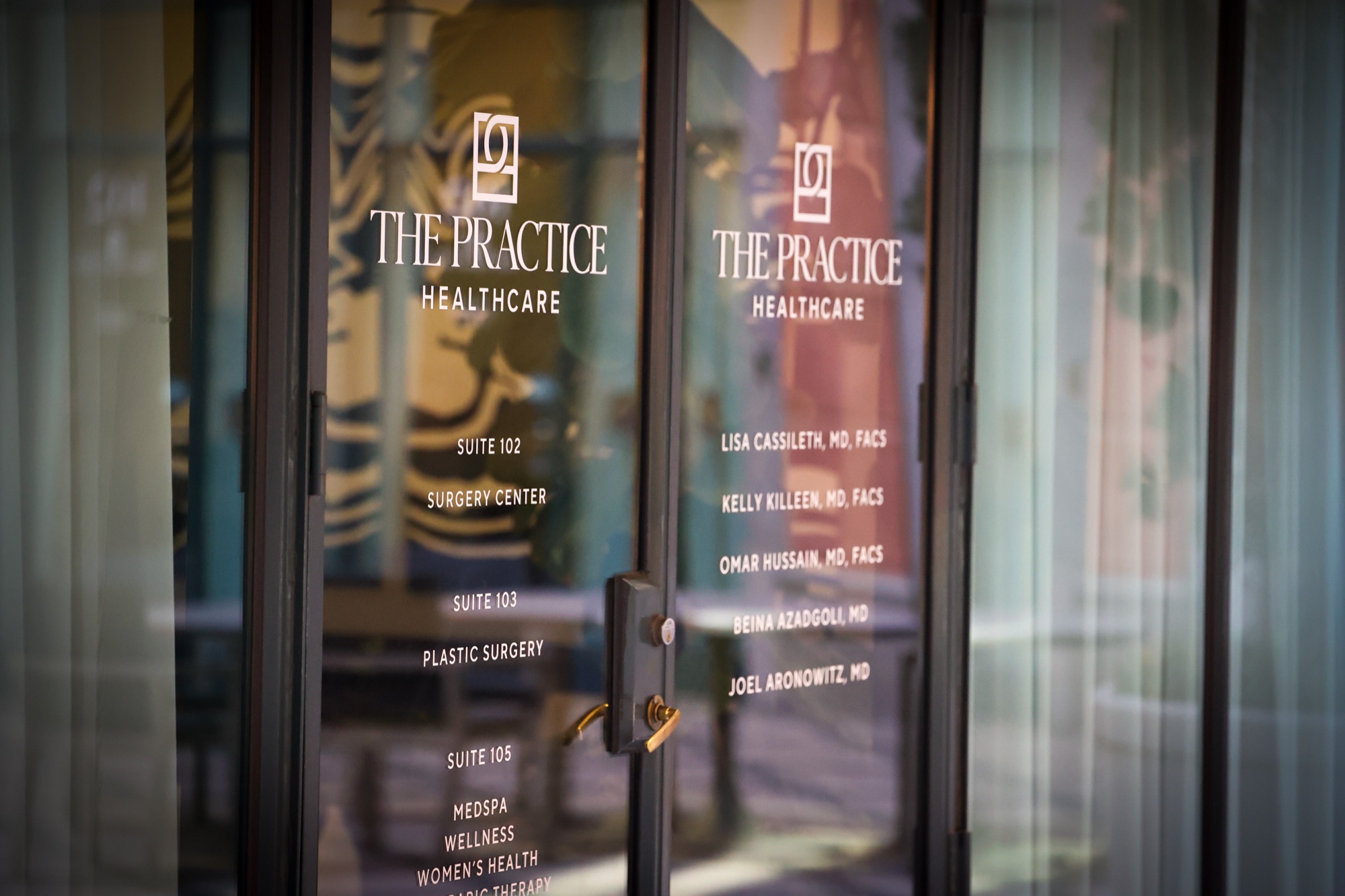
Dr. Azadgoli operates at The Practice Healthcare's fully independent, on-property ambulatory surgery center — a Medicare-certified, physician-led facility recognized by Newsweek as one of California's top centers for independent, privately owned surgery.
Consultation, surgery, aftercare, and recovery all happen in one building, with the same team. No outside hospital. No new staff to meet the day of surgery. The same person who checked you in at the consult is there when you wake up.
What to expect
From consultation to recovery.
Outpatient under local with sedation or general anesthesia. Visible swelling for one to two weeks. Some of the grafted fat resorbs over the first three months; what remains is permanent.

Insurance & coverage
Patient Advocacy handles the paperwork.
Our advocacy team verifies benefits, pursues pre-authorizations, and appeals denials. You don't navigate insurance on your own.
Cosmetic procedures are generally not covered by insurance. For reconstructive or medically necessary work, our advocacy team verifies your benefits and presents the out-of-pocket estimate before anything is scheduled.
How we work with insurance
- 1 Verification by expertsOur advocacy team verifies your benefits before any procedure — so we know exactly what is and is not covered.
- 2 Patient advocacy & follow-throughWe aggressively pursue pre-authorizations, appeal denials when appropriate, and hold carriers accountable to their commitments.
- 3 Financial transparencyYou receive a clear written estimate of potential out-of-pocket costs. No surprises on the day of surgery.
- 4 Collaboration with carriersOur team handles documentation and communication directly with your insurance company.
- 5 Options & supportIf a procedure is not covered, we walk you through cash-pay options, financing, and other pathways to care.
FAQ
Common questions.
How much of the fat survives?
Typically sixty to eighty percent. Survival depends on the technique used to harvest and inject the fat as well as patient factors like blood supply to the recipient area.
Is it permanent?
Yes — whatever survives the first three months is your own tissue and lasts indefinitely. The face still ages, but the grafted fat persists.
Can I have it touched up later?
Yes. Some patients have a small second graft after a year if more volume is desired. This is planned during the initial consultation when relevant.
Will I gain weight if I gain weight after?
The grafted fat behaves like the fat it came from — it can shrink with weight loss and grow with weight gain. Stable weight after grafting is what preserves the result.
Can it replace filler entirely?
For some patients, yes. Others combine the two: fat for foundational volume, filler for fine-tuning. Fat is permanent but the result takes months to settle; filler is immediate but temporary.
Where is the fat taken from?
Most commonly the abdomen, flanks, or inner thighs. The donor site is chosen based on where fat is available and where the patient also benefits from some contour improvement.
Ready to discuss facial fat grafting?
Schedule a consultation with Dr. Azadgoli and her team to explore your options.
Request a consultation