
Breast
Oncoplastic Reduction
Combines tumor removal with a breast reduction technique, reshaping the breast during the cancer surgery. For patients with larger breasts it can achieve clear margins while improving shape, often avoiding separate reconstruction. Also relevant to patients considering breast reduction.


Overview
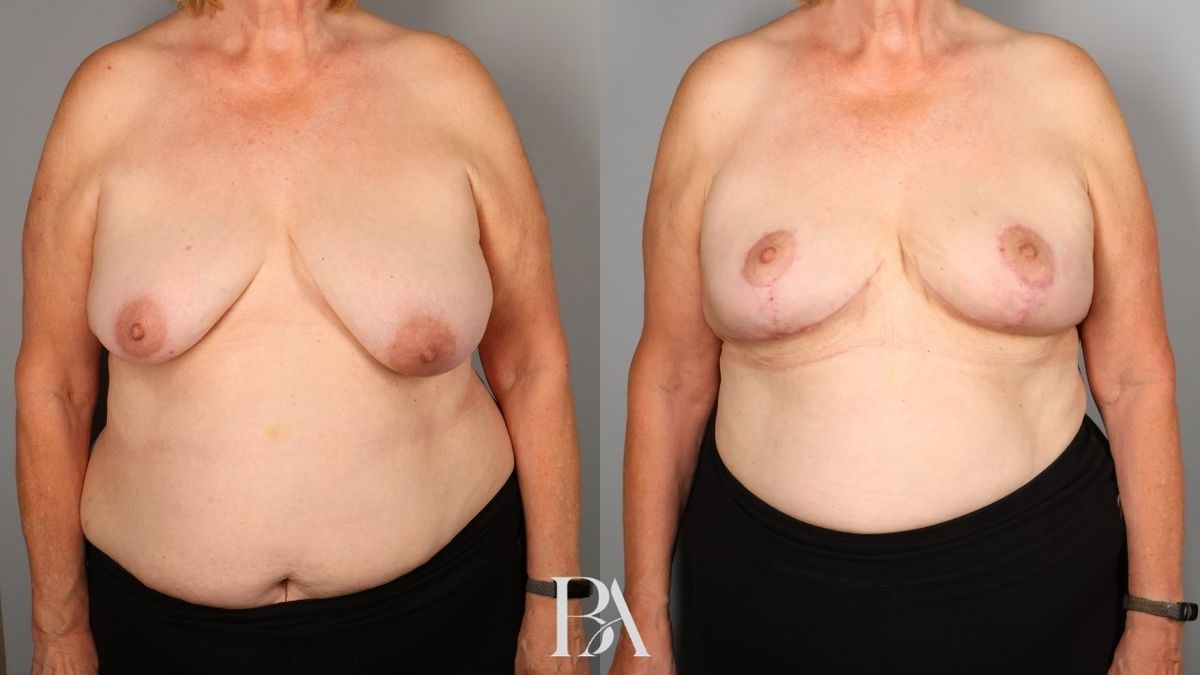
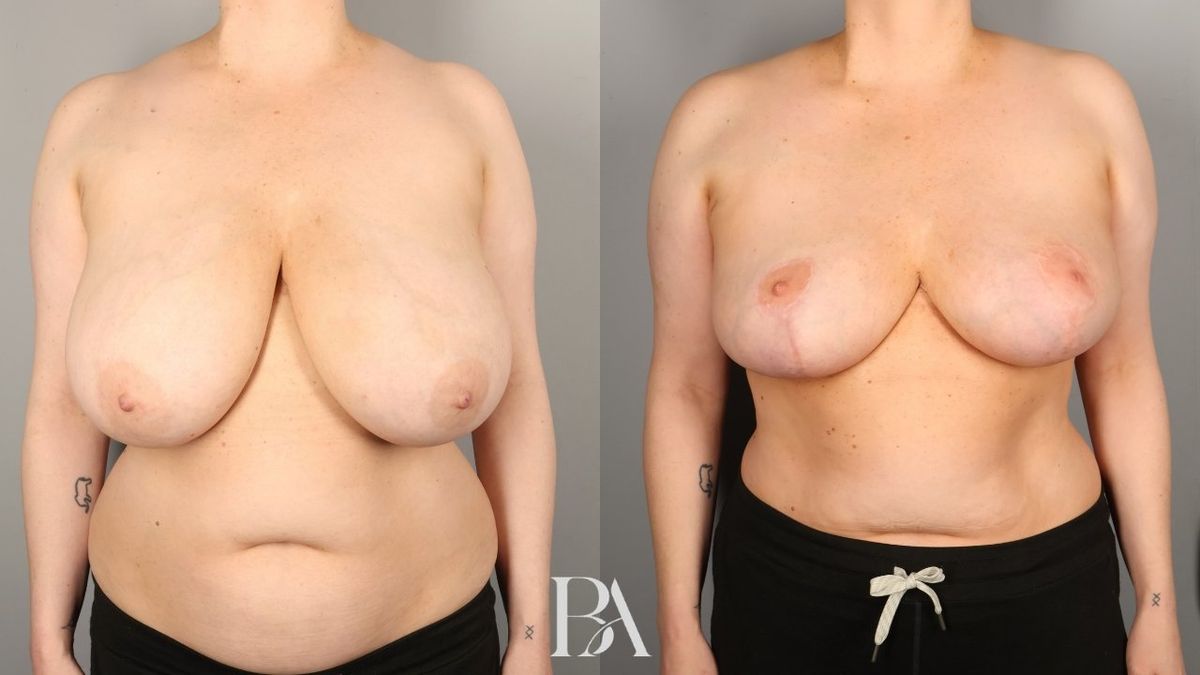
Oncoplastic reduction treats breast cancer and reshapes the breast in a single operation. The tumor is removed using the same incision pattern as a breast reduction, and the remaining tissue is reshaped while excess skin and volume are reduced. The opposite breast is usually reduced to match for symmetry. For patients with larger breasts, this approach can achieve clear oncologic margins while improving breast shape and relieving the functional symptoms that come with larger breasts, often without implant-based reconstruction.
Who it's for
The right candidate.
Patients with breast cancer who also have larger breasts and would benefit from a reduction, allowing the tumor to be removed and the breast reshaped in one operation. It is also relevant to patients who would otherwise consider a breast reduction. Candidacy depends on tumor location and size relative to the breast.
Technique
How it's done.
The tumor is removed through the same incision pattern used for a breast reduction. The remaining tissue is reshaped and excess skin and volume reduced, and the opposite breast is usually reduced for symmetry. Working with the breast surgeon, Dr. Azadgoli reshapes the breast once clear margins are achieved.
Where this happens
Our own surgery center.
One roof, one team.
Dr. Azadgoli operates at The Practice Healthcare's fully independent, on-property ambulatory surgery center — a Medicare-certified, physician-led facility recognized by Newsweek as one of California's top centers for independent, privately owned surgery.
Consultation, surgery, aftercare, and recovery all happen in one building, with the same team. No outside hospital. No new staff to meet the day of surgery. The same person who checked you in at the consult is there when you wake up.
What to expect
From consultation to recovery.
Surgery is outpatient or an overnight stay. A surgical bra is worn for six weeks. Most patients are back to desk work in two weeks. Radiation, if part of the cancer treatment, follows healing and can affect the final shape, which is discussed in planning.

Patient results
Real cases.
Insurance & coverage
Patient Advocacy handles the paperwork.
Our advocacy team verifies benefits, pursues pre-authorizations, and appeals denials. You don't navigate insurance on your own.
Cosmetic procedures are generally not covered by insurance. For reconstructive or medically necessary work, our advocacy team verifies your benefits and presents the out-of-pocket estimate before anything is scheduled.
How we work with insurance
- 1 Verification by expertsOur advocacy team verifies your benefits before any procedure — so we know exactly what is and is not covered.
- 2 Patient advocacy & follow-throughWe aggressively pursue pre-authorizations, appeal denials when appropriate, and hold carriers accountable to their commitments.
- 3 Financial transparencyYou receive a clear written estimate of potential out-of-pocket costs. No surprises on the day of surgery.
- 4 Collaboration with carriersOur team handles documentation and communication directly with your insurance company.
- 5 Options & supportIf a procedure is not covered, we walk you through cash-pay options, financing, and other pathways to care.
FAQ
Common questions.
How is oncoplastic reduction different from a standard lumpectomy?
A standard lumpectomy removes the tumor and closes the defect directly, which can leave a contour irregularity. Oncoplastic reduction removes the tumor and reshapes the whole breast using reduction techniques, so the result is a smaller, better-shaped breast rather than a divot.
Will both breasts be operated on?
Usually yes. The cancer side is reduced and reshaped during the tumor removal, and the opposite breast is reduced to match, either at the same operation or shortly after, so the two are symmetric.
Does radiation affect the result?
It can. Radiation after breast-conserving surgery can change skin texture and firmness over time. The reshaping is planned with that in mind, and final settling is assessed after radiation is complete.
Is oncoplastic reduction covered by insurance?
Yes. Because it is part of cancer treatment, it is covered, including reduction of the opposite breast for symmetry. The team handles documentation and pre-authorization.
Can I have this if my breasts are not large?
Oncoplastic techniques work best when there is enough breast tissue to reshape. For smaller breasts or certain tumor locations, a different approach may be recommended, assessed with the breast surgeon.
Will I still need a mastectomy?
Oncoplastic reduction is a breast-conserving approach — the breast is kept. It is an option when the tumor can be removed with clear margins while preserving and reshaping the breast. If a mastectomy is required, reconstruction options are discussed instead.
Related procedures
Ready to discuss oncoplastic reduction?
Schedule a consultation with Dr. Azadgoli and her team to explore your options.
Request a consultation