
Eyes
Lower Blepharoplasty
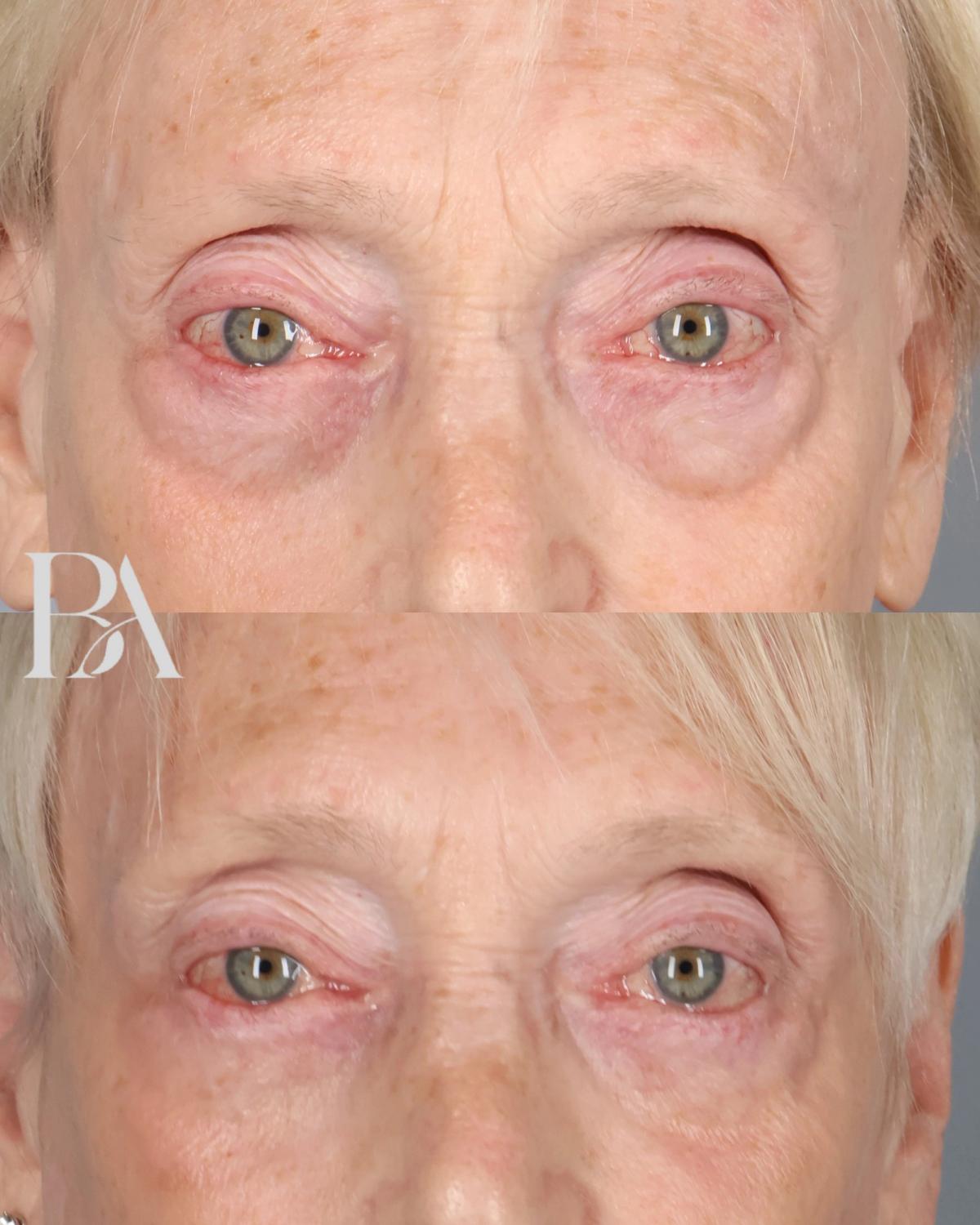
Addresses under-eye bags and lower-lid puffiness by repositioning or reducing fat and, when needed, tightening the lid. Often performed through a hidden incision inside the lower eyelid.


Overview
Lower blepharoplasty treats the under-eye region. Herniated fat that creates bags is repositioned or reduced, and loose lower-lid skin is addressed when present. The approach is often transconjunctival, through the inside of the lower lid, leaving no external scar, and it may be combined with skin tightening or fat transfer to smooth the lid-cheek transition. Careful technique protects lower-lid position, since over-resection is the main cause of a hollow or pulled-down result.
Who it's for
The right candidate.
Patients with under-eye bags, lower-lid puffiness, or a tired appearance caused by herniated fat, with or without excess lower-lid skin. Good lower-lid tone matters; patients with significant lid laxity may need a tightening step added to protect lid position.
Technique
How it's done.
The herniated fat that creates bags is repositioned or reduced, most often through a transconjunctival incision inside the lower lid, which leaves no external scar. When there is excess skin, a fine incision just below the lash line is used, sometimes with a canthal tightening step to support lid position. Fat transfer is occasionally added to smooth the lid-cheek junction.
Where this happens
Our own surgery center.
One roof, one team.
Dr. Azadgoli operates at The Practice Healthcare's fully independent, on-property ambulatory surgery center — a Medicare-certified, physician-led facility recognized by Newsweek as one of California's top centers for independent, privately owned surgery.
Consultation, surgery, aftercare, and recovery all happen in one building, with the same team. No outside hospital. No new staff to meet the day of surgery. The same person who checked you in at the consult is there when you wake up.
What to expect
From consultation to recovery.
Outpatient under local with sedation or general anesthesia. Bruising and swelling are most visible in the first week and settle over two to three weeks. Most patients are back to social activity in seven to ten days, with the final result over several weeks.

Patient results
Real cases.
Insurance & coverage
Patient Advocacy handles the paperwork.
Our advocacy team verifies benefits, pursues pre-authorizations, and appeals denials. You don't navigate insurance on your own.
Cosmetic procedures are generally not covered by insurance. For reconstructive or medically necessary work, our advocacy team verifies your benefits and presents the out-of-pocket estimate before anything is scheduled.
How we work with insurance
- 1 Verification by expertsOur advocacy team verifies your benefits before any procedure — so we know exactly what is and is not covered.
- 2 Patient advocacy & follow-throughWe aggressively pursue pre-authorizations, appeal denials when appropriate, and hold carriers accountable to their commitments.
- 3 Financial transparencyYou receive a clear written estimate of potential out-of-pocket costs. No surprises on the day of surgery.
- 4 Collaboration with carriersOur team handles documentation and communication directly with your insurance company.
- 5 Options & supportIf a procedure is not covered, we walk you through cash-pay options, financing, and other pathways to care.
FAQ
Common questions.
Will there be a visible scar?
When done from inside the lid (transconjunctival), there is no external scar. When skin removal is needed, the incision sits just under the lash line and fades to an inconspicuous line.
Will it get rid of my dark circles?
It addresses the puffiness and shadow caused by herniated fat. True pigment-based dark circles are a skin issue, better treated with skincare or laser, and that distinction is assessed in consultation.
Is it safe for my lower-lid position?
Protecting lid position is the priority. When there is any lid laxity, a tightening step is added. Over-resection of skin or fat is the main cause of a pulled-down lid, and conservative technique avoids it.
Can fat be added instead of removed?
Sometimes both. Fat that bulges is repositioned, and where the lid-cheek junction is hollow, fat transfer fills it. The goal is a smooth transition rather than simply removing fat.
Is lower blepharoplasty covered by insurance?
Lower blepharoplasty is almost always cosmetic and not covered, since it rarely affects the visual field. The team confirms in your case.
Can it be combined with other procedures?
Yes — commonly with upper blepharoplasty, a brow lift, or skin resurfacing of the lower lids to address texture and fine lines at the same time.
Related procedures
Ready to discuss lower blepharoplasty?
Schedule a consultation with Dr. Azadgoli and her team to explore your options.
Request a consultation